5 Signs Your Metal Roof Needs Repair Before It Starts Leaking
The early warning signs of a failing metal or zinc roof in Malaysia — rust spots, loose screws, and what they mean.
Spotting a silent failure early is crucial, which is why knowing the 5 signs your metal roof needs repair before it starts leaking will save you thousands of ringgit.
Our team frequently inspects factory buildings and homes across the Klang Valley where hidden corrosion has been quietly eating away at structures for years. This silent damage occurs because metal surfaces do not announce their failure with an immediate, dramatic drip like clay tiles do.
We often find that by the time a water stain appears on your ceiling, the structural purlins underneath are already heavily compromised. Let’s look at the data, what it is actually telling us, and explore a few practical ways to respond.
Our guide will break down the early warnings of roof failure, ranking them from a minor symptom to the most urgent crisis.
1. Rust Spots Around Screws
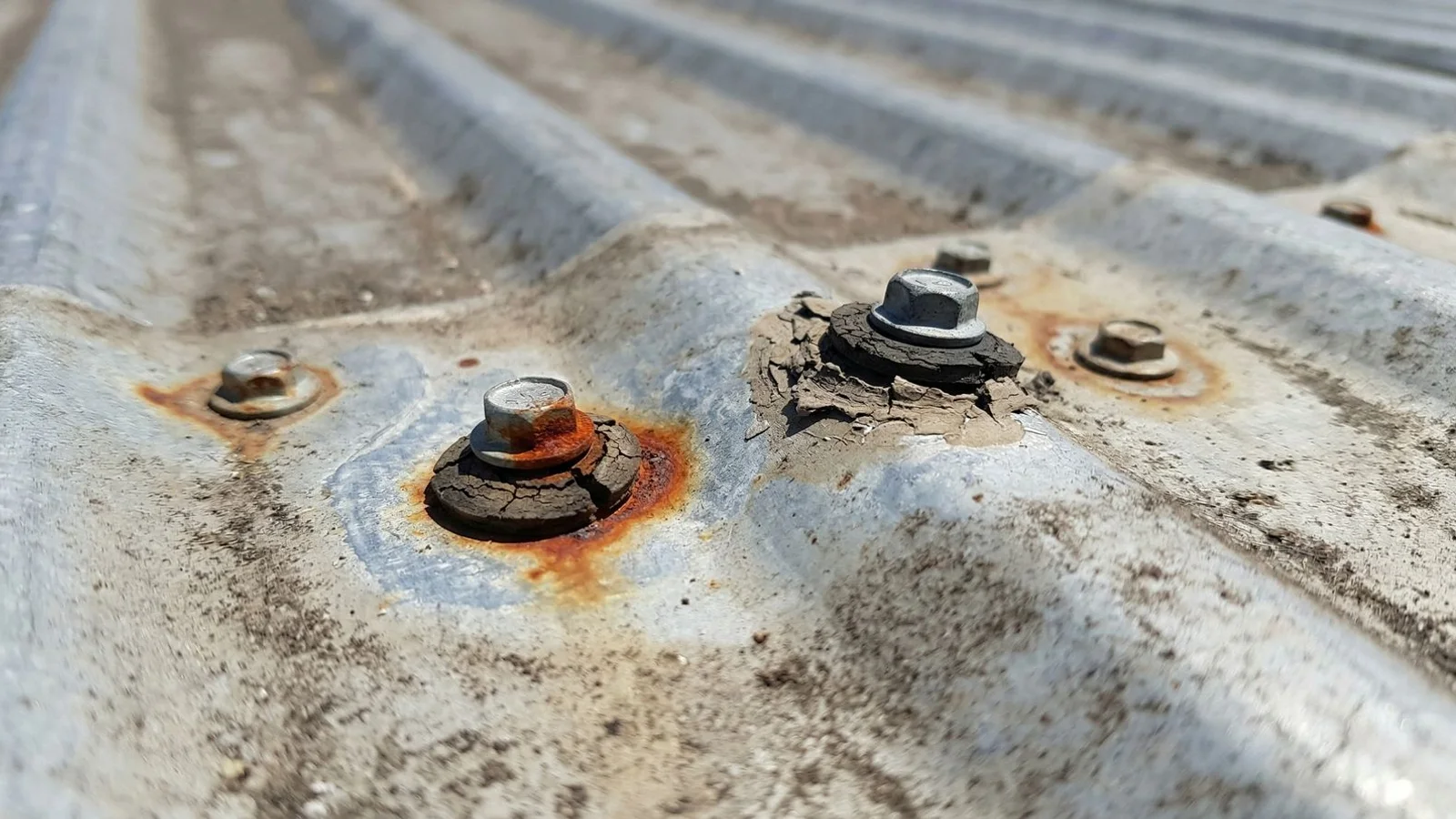
Finding rust spots around your fasteners is the most common early warning sign of a failing roof. Every self-drilling screw on a metal deck roof uses a small rubber washer to seal the drilled hole, typically made of Ethylene Propylene Diene Monomer (EPDM).
Our 2026 inspections across the Klang Valley show that while EPDM is rated to handle temperatures up to 120°C, years of direct exposure to Malaysia’s intense UV rays will eventually cause these seals to harden and crack. Water then creeps down the screw shaft, creating a small brown halo of rust on the panel surface.
We consistently notice another hidden issue during these early stages, which is installation damage. Many standard fasteners actually scratch the zinc coating along the pierced hole during installation, leaving the raw steel completely exposed to humid air. Here is exactly what these early signs mean for your property:
- Aging Washers: The rubber seals are losing their elasticity and surface-level moisture is tracking inside.
- Coating Failure: Scratches from the screw threads have compromised the anti-corrosive layer.
- Hidden Danger: The rust is currently surface-level, but the purlins below are at immediate risk.
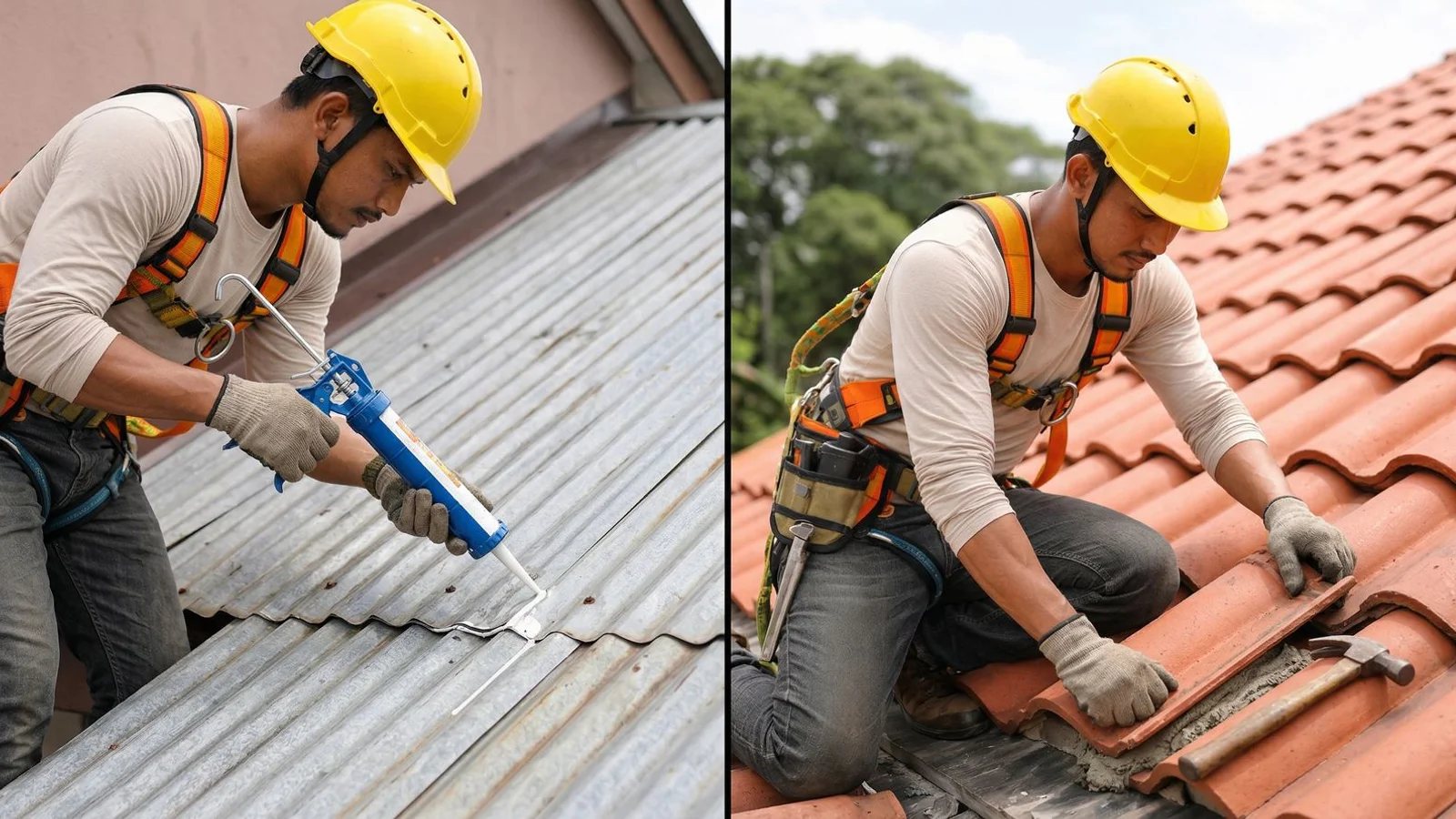
The fix: Replace the washers and screws zone-by-zone before the deterioration spreads. Our recommended approach involves upgrading to oversized EPDM washers or dome caps that completely encapsulate the rubber to prevent future UV damage. This preventative step is relatively cheap if caught early, typically costing RM15 to RM30 per screw on a standard residential zinc roof.
2. Rust Streaks Running Down Panels
Our technicians refer to this as the second stage of deterioration, which leaves highly visible brown streaks running down the length of the metal panel. When surface rust remains active for too long, rainwater begins carrying iron oxide downhill from the initial rust source. The protective coating is actively breaking down, exposing the bare metal to the elements.
We regularly see this issue on older roofs where the original Zincalume or galvanized layers have eroded. The presence of oxygen and tropical moisture causes oxides to form rapidly, permanently disfiguring the metal and weakening the panel. To help you diagnose the severity of the oxidation, compare these two distinct stages:
| Damage Stage | Visual Symptom | Structural Impact |
|---|---|---|
| Stage 1: Localized Rust | Brown halos isolated strictly around screw heads. | Minimal damage, but sealing integrity is lost. |
| Stage 2: Active Streaking | Long, orange or brown streaks following the flow of rainwater. | The anti-corrosive coating is failing across a larger surface area. |
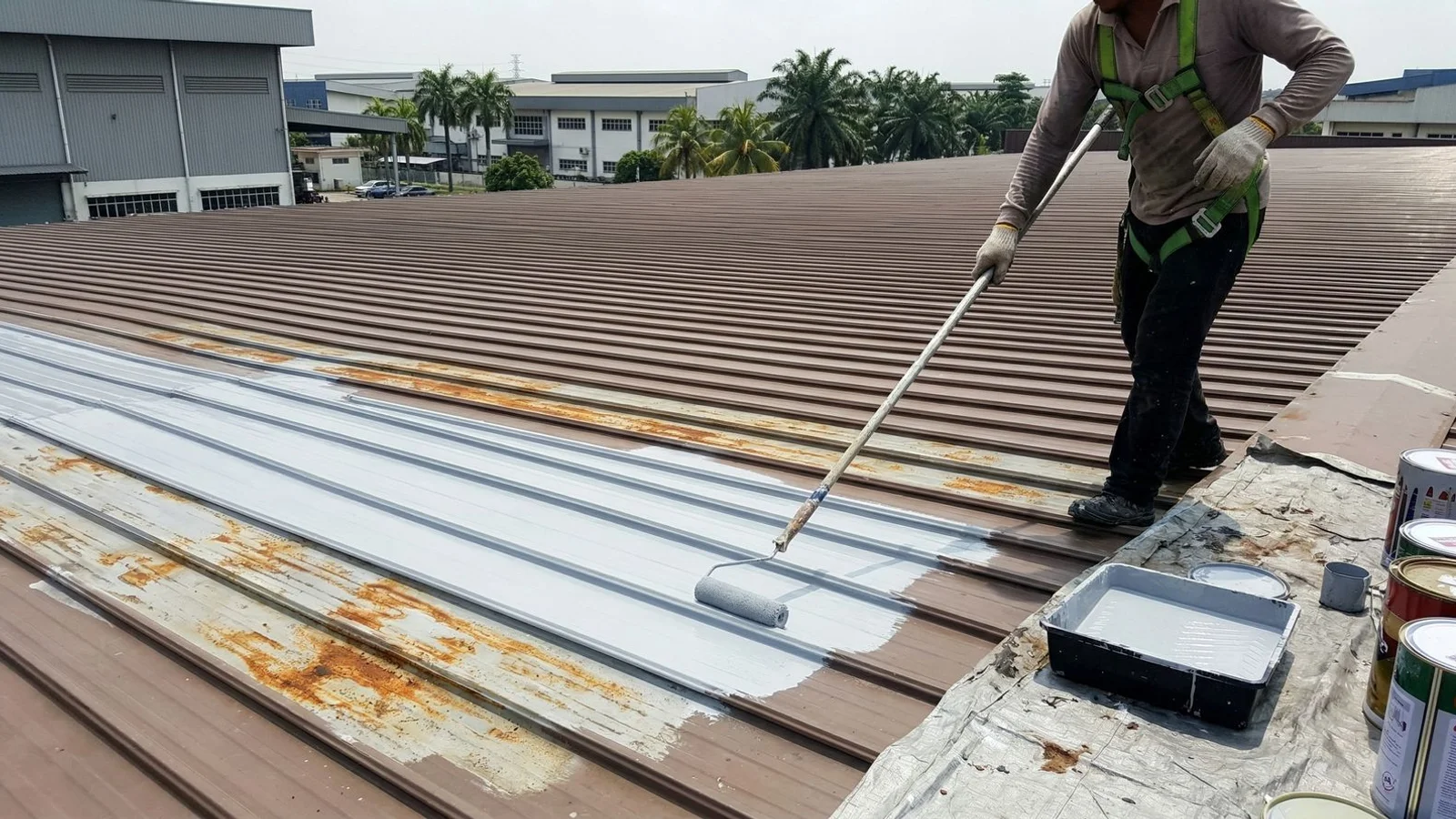
Our standard repair plans for this level of damage usually range from RM500 to RM1,500 per zone, depending on the square footage. The fix: This process requires surface cleaning, a rust conversion coating, and a fresh anti-corrosive topcoat applied directly to the affected zone.
3. Lifted or Wavy Ridge Cap
A metal ridge cap that no longer sits flat against the panels is a massive red flag. Our recent 2026 weather data shows that thunderstorms in the Klang Valley frequently produce wind speeds between 15 to 20 meters per second, or roughly 54 to 72 kilometers per hour. Wind gets directly under a lifted ridge cap during these squalls, driving heavy rain straight into the roof cavity.
You will usually notice the capping lifted at one end, rippled in the middle, or visibly loose when you push on it. We often trace this problem back to thermal cycling, where intense daily heat warps the panels over time. Fasteners slowly loosen as the metal expands and contracts, causing the primary sealant to fail entirely. The structural integrity of the roof peak is compromised, meaning water is almost certainly getting in during driving rain.
Pro-Tip: If you hear a distinct rattling sound from your ceiling during a storm, the wind is already lifting your ridge cap. Do not wait for a water stain to appear before booking an inspection.
Our repair crews typically tackle this by re-fastening, re-sealing, and sometimes replacing damaged sections of the ridge cap. The fix: Expect a typical cost of RM400 to RM1,200 to secure the peak of your roof against the next major storm.
4. Loose or Missing Screws
Fasteners backing out of the panels, sitting slightly proud of the surface, or missing completely indicate a loss of structural grip. Our inspections frequently uncover screws that have completely stripped their original expansion holes due to thermal cycling and constant vibration. The roof is essentially telling you that the metal sheets are moving and the structural fastening is weakening.
We classify this as a severe panel-detachment risk, especially when high winds hit an aging structure. This is a major step beyond a simple leak hazard, because a loose panel can easily tear off during a sudden downpour. Here are the most common reasons your screws are losing their grip:
- Thermal Expansion: The metal sheets expand in the midday sun and contract at night, slowly wiggling the screws loose.
- Structural Vibration: Heavy traffic or nearby construction can vibrate the roof deck over time.
- Oversized Holes: The continuous movement eventually widens the drilled holes, rendering standard screws useless.
Our technicians resolve this by replacing missing fasteners and upgrading to longer or higher-grip screws where the original hole is compromised. The fix: This sometimes requires installing patch plates to properly secure the widened gaps, ensuring the deck remains stable.
5. Visible Perforation, Delamination, or Holes
Seeing daylight through the roof from underneath means you are completely past the maintenance phase and into mandatory replacement territory. Our teams regularly encounter large areas of panels that have delaminated, crumbled at the edges, or been eaten entirely through by long-term rust.
Delamination occurs when the protective paint system and the underlying zinc-aluminum substrate break down completely, often due to harsh UV effects or poor manufacturing. Coatings and sealants simply cannot save a panel once it reaches this level of structural decay.
We always check the surrounding materials, because severe perforation usually indicates that the supporting purlins are also suffering from advanced corrosion. A completely compromised panel offers zero resistance against water intrusion, rendering the property vulnerable to immediate water damage. To understand your options at this stage, review this quick assessment guide:
| Damage Extent | Structural Condition | Recommended Action |
|---|---|---|
| Contained Holes | Rust is limited to a small, specific area of one panel. | Localized panel replacement. |
| Widespread Delamination | The protective coating is flaking off across multiple sheets. | Partial or full re-roofing. |
| Visible Daylight | The metal is completely perforated and brittle. | Immediate full roof replacement. |
Our final assessment will determine if localized panel replacement is viable, or if partial to full re-roofing is required. The fix: Prepare for a significant investment, as widespread damage guarantees a full material overhaul.
The Cheapest Moment to Act on the 5 Signs Your Metal Roof Needs Repair Before It Starts Leaking
The repair pattern outlined above is essentially a steep cost curve for property owners.
Our data proves that a problem caught at the very first rust spot only costs a few hundred ringgit to fix. Ignoring the exact same issue until you see visible daylight can cost ten or twenty times more in structural overhauls.
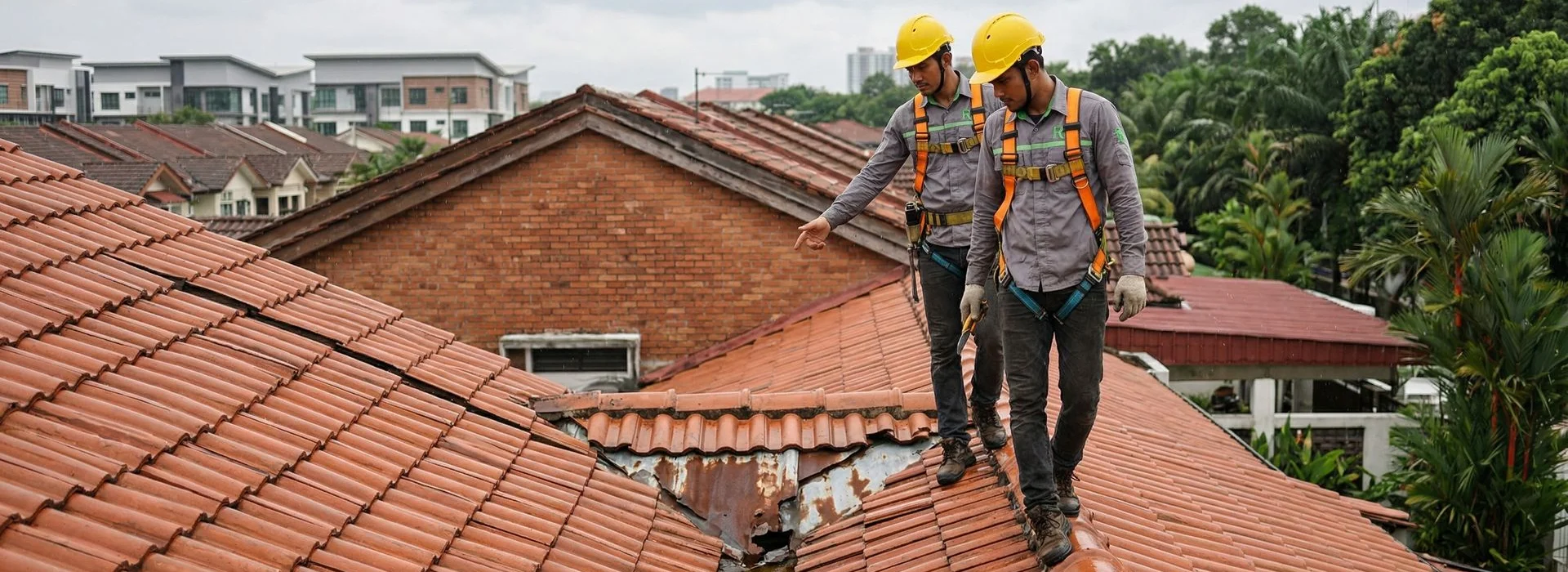
We highly recommend scheduling a proper metal roof inspection the moment you notice that first brown halo, not after a thunderstorm forces an emergency call.
Book the RM30 onsite inspection today, and a specialist will pinpoint exactly where your roof sits on this cost curve.
Our honest repair plan will give you the precise data needed to make a smart, proactive decision before the leaks start.
For professional roof leaking repair in Kuala Lumpur you can trust across the Klang Valley, reach out to the RLR Roofer team today.