Metal Roof vs Tile Roof: Why Leak Repair Is Not the Same
The repair methods for metal roof leaks and tile roof leaks are completely different. Here's why getting the right contractor matters.
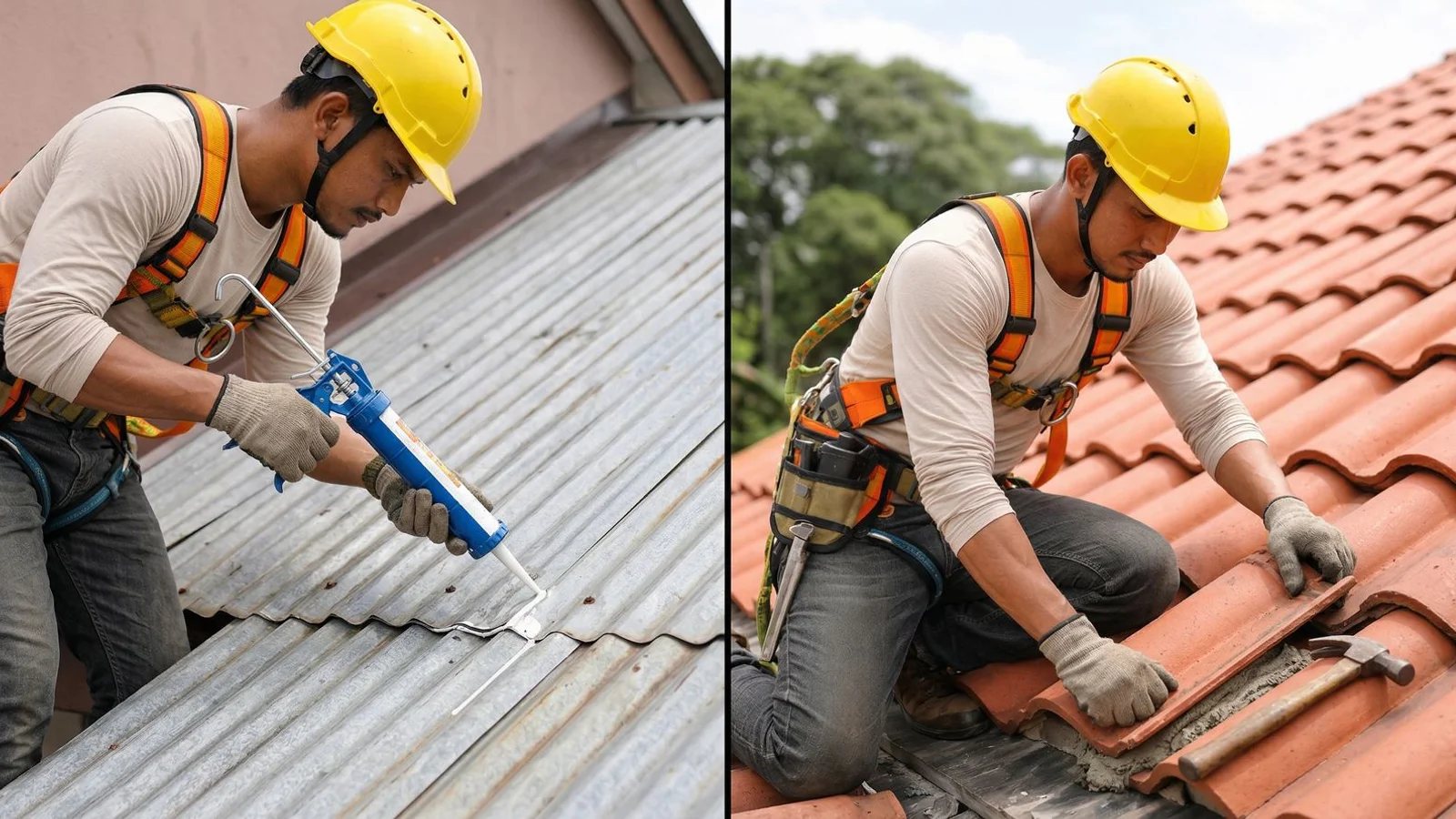
A standard contractor might seem like a safe bet for any overhead leak. Many property owners in the Klang Valley quickly learn that this assumption leads to repeat failures.
We have seen countless botched jobs simply because a builder applied the wrong logic to the problem. Understanding a metal roof vs tile roof: why leak repair is not the same can save you thousands of Ringgit.
The materials, the diagnostics, and even the required tools differ entirely.
Let’s explore exactly how these two systems fail and what competent repair actually looks like in 2026.
Metal Roof vs Tile Roof: Why Leak Repair Is Not the Same Structurally
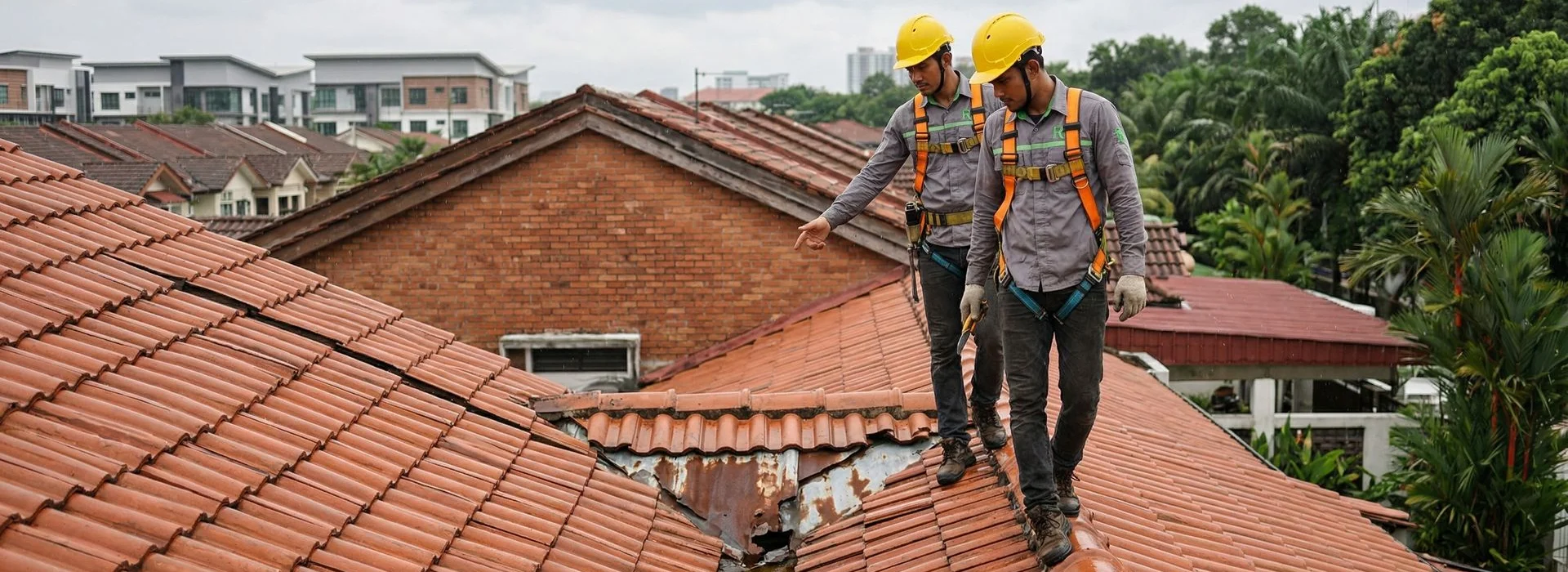
A tile roof usually leaks because something physical has broken or shifted out of place. Kuala Lumpur sees an average of 2,500mm of rain annually. Heavy monsoon downpours easily exploit a cracked Monier tile, a slipped ridge cap, or a failed silicone joint.
We fix a concrete or clay tile roof by locating and replacing that specific compromised component.
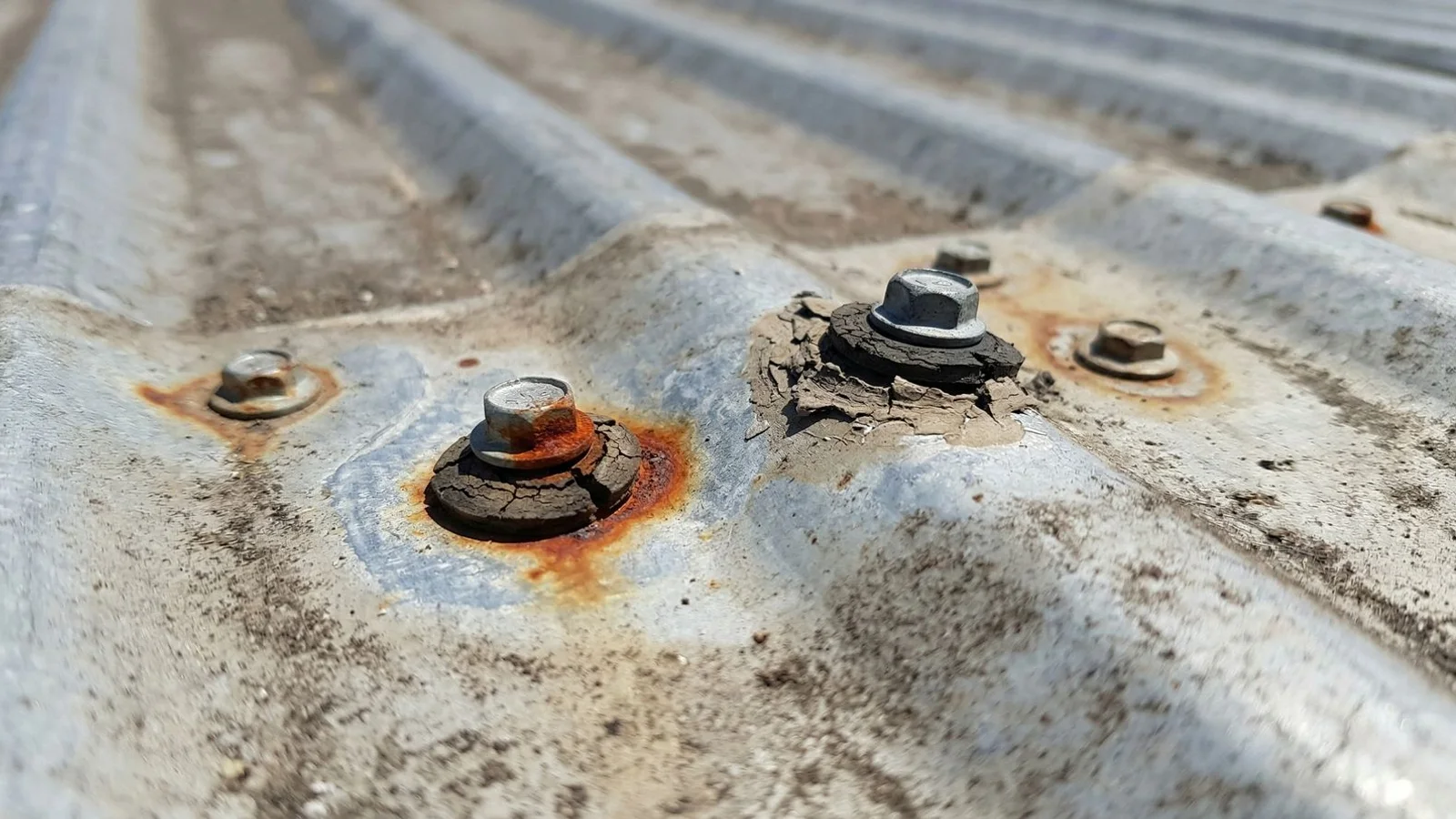
Metal roofs fail for entirely different, often invisible reasons. Intense Malaysian sunlight can heat a metal surface to over 65°C during the day. This extreme thermal cycling degrades the EPDM rubber washers beneath mounting screws.
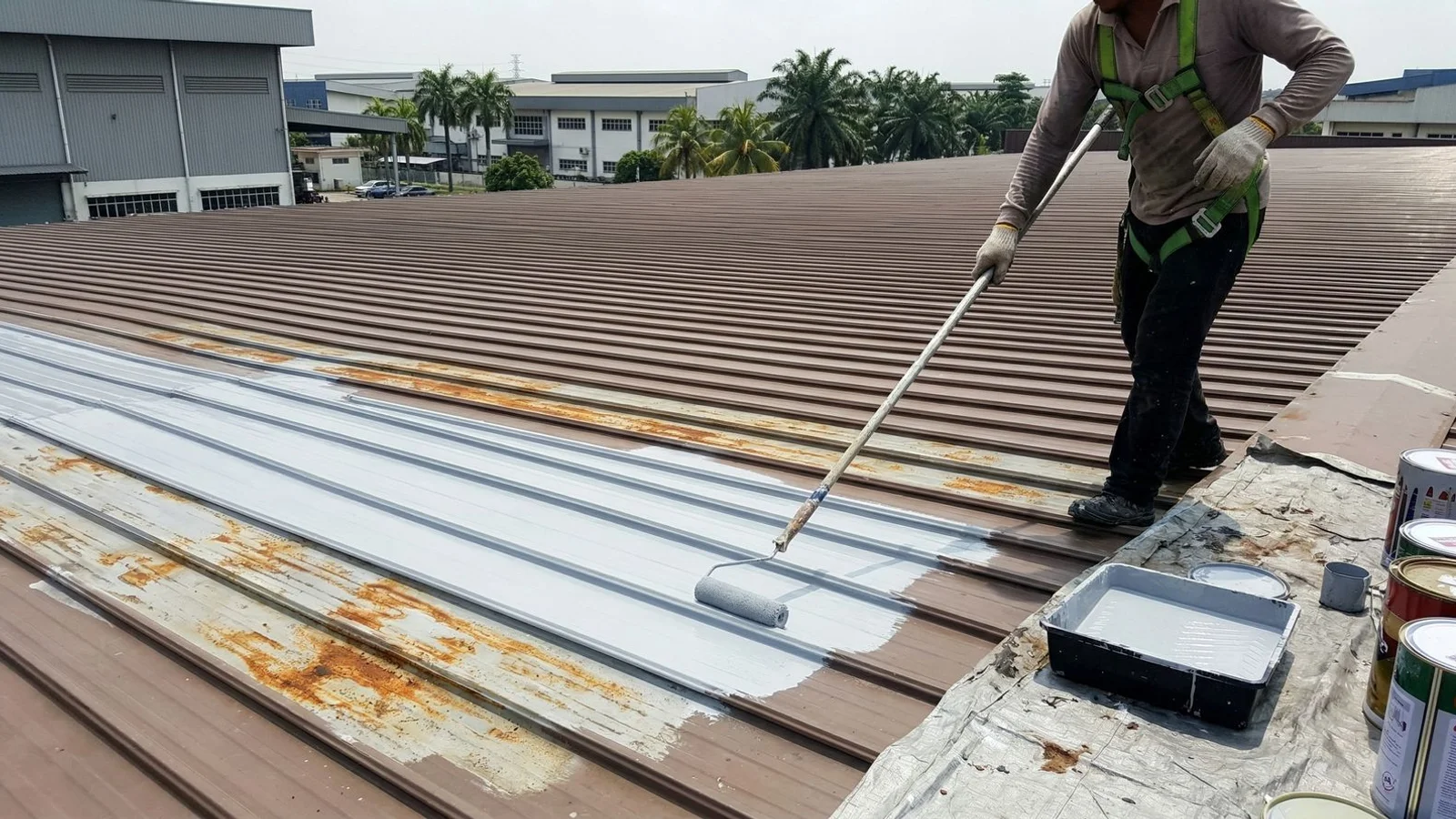
Our team resolves metal roof leaks by treating rust, swapping out degraded fasteners, and re-sealing engineered joints. The diagnostic questions, the materials on the truck, and the physical execution look nothing alike.
Common failure points include:
- Tile Roofs: Cracked clay components, displaced valley flashing, and degraded mortar bedding.
- Metal Decks: Rusted Bluescope Zincalume panels, brittle EPDM screw washers, and separated butyl tape seams.
Different Diagnostic Techniques
Diagnosis on a traditional tile roof is largely a visual process. A cracked surface tile is immediately obvious to a trained eye.
We trace the water path from the entry point to the water stain on your ceiling. Plaster ceilings typically show damp patches directly beneath compromised battens and roof beams.
Tracking a metal roof leak requires a highly forensic approach. A metal sheet can let water in around a single degraded screw that looks perfectly fine from two metres away.
Our specialists carry FLIR thermal imaging cameras and Tramex pinless moisture meters specifically for this reason. These modern tools allow us to detect trapped moisture beneath the metal without tearing up the deck. Rust spots, washer elasticity, panel-to-panel joint integrity, and flashing seals all require close physical inspection.
“A visual check might work for broken tiles, but detecting a microscopic seam failure on a metal deck requires professional thermal and moisture tracking equipment.”
Different Materials
Contractors cannot use the same sealing compounds or replacement parts for both systems. A contractor who stocks one type of material rarely stocks the other properly.
We maintain completely separate supply inventories to ensure permanent fixes. Using standard silicone on a hot zinc roof will result in peeling and a new leak within six months.
Here is a breakdown of the specific items required for each system:
| Repair Component | Tile Roof Kit | Metal Roof Kit |
|---|---|---|
| Primary Sealant | Standard weather-grade silicone and ridge cap mortar | Industrial Sikaflex polyurethane or metal-compatible butyl tape |
| Fasteners | Tile hooks and galvanised nails | Class 4 self-drilling screws with fresh EPDM rubber washers |
| Surface Prep | Wire brush and underlay patching tape | Rust conversion primer and anti-corrosive topcoat |
| Main Materials | Matched clay or concrete tiles (e.g., Lama, Kia profiles) | Replacement BlueScope steel or Zincalume panel sections |
Different Safety Profiles
Working at height in Malaysia carries specific risks depending on the surface material. Metal decks become incredibly slippery during a morning rain shower. They also get hot enough under the midday sun to cause severe contact burns to exposed skin.
Tile roofs provide a much more stable surface underfoot. Stepping on a clay tile incorrectly can easily snap it and create a brand new entry point for water.
We train our technicians to step only on the lower third of the tile where it overlaps the structural batten. Walking a tile roof the wrong way causes property damage, while walking a metal deck incorrectly risks severe personal injury.
Competent roofers respect both hazards by following strict Department of Occupational Safety and Health (DOSH) guidelines:
- Using temperature-rated gloves and knee pads on sun-baked metal.
- Applying specific weight-distribution techniques on brittle clay.
- Deploying material-specific harness anchors to prevent surface damage.
Different Pricing Structures
Estimating repair costs requires different financial logic for each material type. Tile repairs are typically priced by the specific broken component and the labour required to swap it out.
Our current 2026 data shows that a single-source leak involving tile, ridge, or flashing work usually costs between RM300 and RM800. You will need to factor in additional costs if tall residential structures require scaffolding for safe access.
Metal roof jobs follow a zone-based pricing model based on the overall condition of the steel. Neither system is inherently more expensive to maintain, they simply demand unique materials and completely distinct labour allocations.
Typical repair investments in the Klang Valley include:
- Residential Tile Repairs: RM300 - RM800 for single-source component replacements.
- Residential Metal Repairs: RM500 - RM1,500 for a single-zone rust, washer, and flashing treatment.
- Commercial Metal Repairs: RM2,000 - RM5,000+ for larger factory or warehouse zones requiring heavy rust conversion.
The Contractor Test
Evaluating a potential tradesperson is crucial before signing off on any quotation. You need to ensure the person inspecting your property actually understands the specific physics of your roof.
We recommend asking any prospective builder these three specific questions:
- “Do you specialise in both clay tile and zinc metal roofs?”
- “What specific diagnostic tools do you use to track hidden moisture paths?”
- “Will you use standard silicone, or do you stock metal-specific polyurethane sealants?”
A reliable professional will provide detailed answers that align closely with the facts in this guide. Contractors who fumble their answers or claim that all roofs are the same lack the specialised expertise needed for a lasting repair.
Why RLR Does Both
RLR Roofer operates with the specific tools, materials, and training to handle both systems correctly. We carry two completely distinct repair kits in every service van to ensure immediate, accurate solutions.
Calling us for a leak means you get a proper forensic diagnosis instead of a blind guess. Our comprehensive RM30 onsite inspection is designed to identify the true root cause of the water ingress.
Tell us the symptoms you are experiencing.
Our technicians will map the problem, document the exact failure point, and implement the precise methodology your property needs. Contact our team today to schedule your evaluation and protect your property from the next monsoon. Recognizing the difference between a metal roof vs tile roof: why leak repair is not the same ensures you receive a permanent solution.
For professional roof leaking repair in Kuala Lumpur you can trust across the Klang Valley, reach out to the RLR Roofer team today.