Industrial Metal Roof Rust Repair: A Guide for Klang Valley Factories
How factory and warehouse owners in the Klang Valley can extend the life of rusted metal roofs without full replacement.
Every factory owner in Shah Alam, Klang, Rawang, or Puchong eventually faces the same costly decision. When reading this Industrial Metal Roof Rust Repair: A Guide for Klang Valley Factories, you will find exactly what you need to evaluate those terrifying replacement quotes.
The question on the table is always whether a new roof is actually needed.
From what we have seen across the Klang Valley industrial stock, a complete tear-off is rarely the only option. Most rusted factory roofs can be saved, extending their useful life by 5 to 10 years at a fraction of the replacement cost. Let’s look at the data, what it actually tells us about roof failures, and explore practical ways to protect your facility.
Why Factory Roofs Rust the Way They Do
Industrial metal roofs in Malaysia have a very predictable failure pattern. The intense tropical sun and heavy rainfall create the perfect environment for accelerated corrosion. Catching the problem early is the secret to avoiding a massive capital expense.
We typically observe four distinct stages of degradation:
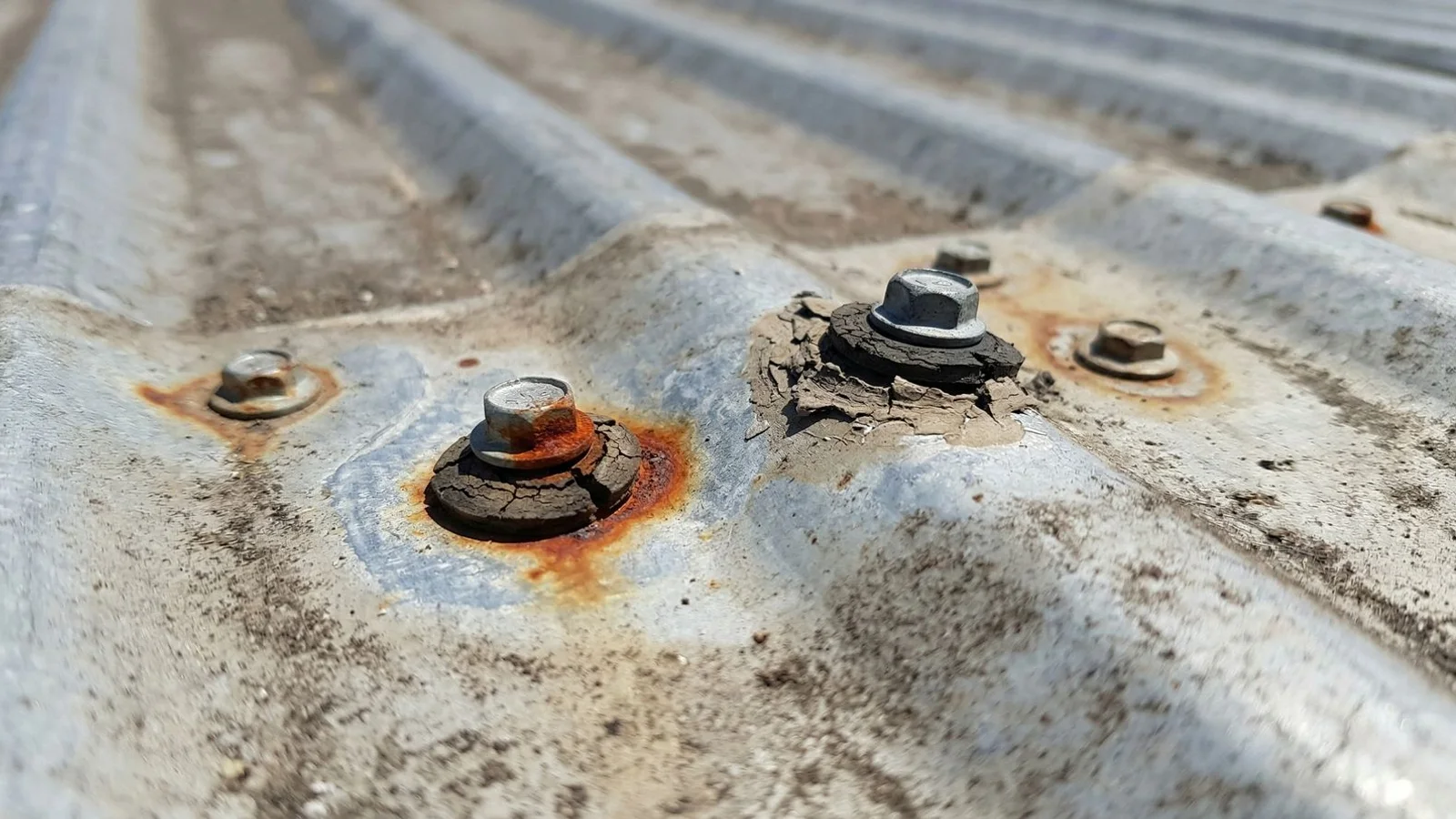
- Stage 1: Fastener Failure. The EPDM (Ethylene Propylene Diene Monomer) washers under self-drilling screws degrade first. Standard washers often crack within 5 to 7 years under the high Malaysian UV index, letting moisture creep straight down the shaft.
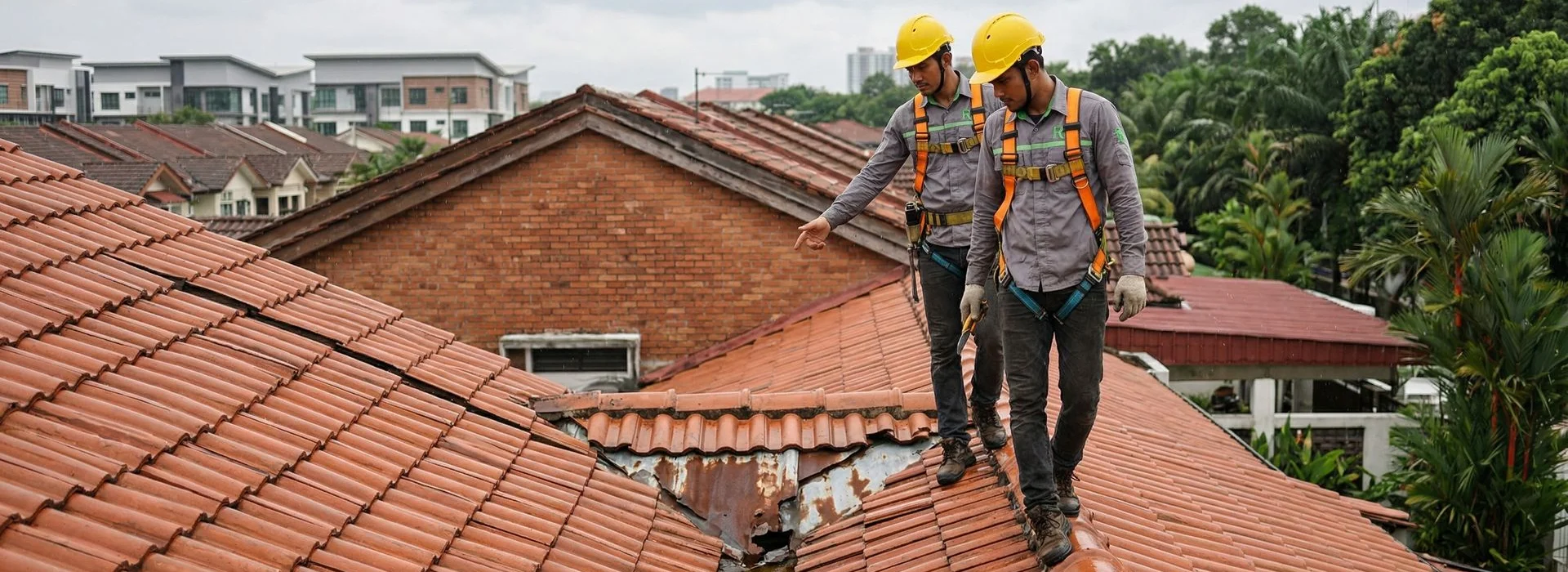
- Stage 2: Flashing Breakdown. Ridge caps, valleys, and wall flashings let water in next. This happens due to sealant fatigue or fasteners loosening from rapid thermal expansion and contraction.
- Stage 3: Panel Edge Corrosion. Where panels overlap, capillary action pulls trapped moisture between the sheets, oxidising the metal out of sight.
- Stage 4: Field Rust. Broad-area rust across the main panel surfaces is the final stage. By the time this is clearly visible, significant corrosion has already taken hold underneath.
The saving grace is that each stage is entirely fixable if caught before the next. Full replacement is really only warranted when panels have lost structural integrity, meaning widespread perforation or compromised metal thickness.
Step 1: Proper Assessment
A serious industrial metal roof assessment requires far more than a quick visual scan from the factory floor. The process demands specific tools and a structured approach to uncover hidden moisture. Many contractors skip this critical step, leading to failed repairs and wasted budgets.
We start by mapping the roof into dedicated zones. This allows us to grade the severity of each area and build a realistic, phased work plan.
A comprehensive inspection must include several specific checks:
- Screw Condition Sampling: Testing a representative sample of fasteners per zone to gauge washer degradation.
- Flashing Integrity: Physically inspecting the seals around ridge caps, valleys, and parapet walls.
- Ultrasonic Thickness Testing: Using an ultrasonic thickness gauge to verify if the metal panels have lost more than 20% of their original structural thickness.
- Drainage Assessment: Checking gutters and downpipes. During the heavy Klang Valley monsoons, which can drop 250mm of rain in a month, blocked gutters create standing pools that submerge panel edges and accelerate rust.
- Sub-Surface Moisture Tracking: Using thermal imaging cameras and interior moisture meters to find leaks before they stain the ceiling panels.
Our technicians also inspect the C-channel purlins beneath the decking. Surface rust on the panels often hides dangerous corrosion on these load-bearing supports below.
Step 2: Phased Repair, Not All-or-Nothing
Industrial repair works best when it is systematically phased out over time. This approach prevents operational downtime and keeps cash flow manageable. For a standard factory, the workflow follows three distinct phases.
We generally recommend tackling the most critical vulnerabilities immediately.
Phase 1: Urgent Fixes
The primary goal here is to stop the bleeding. Teams replace failed washers and screws in the worst zones. They also reseal or replace the degraded flashings and treat active rust at the source to halt any further spread.
Phase 2: Full Roof Rust Conversion
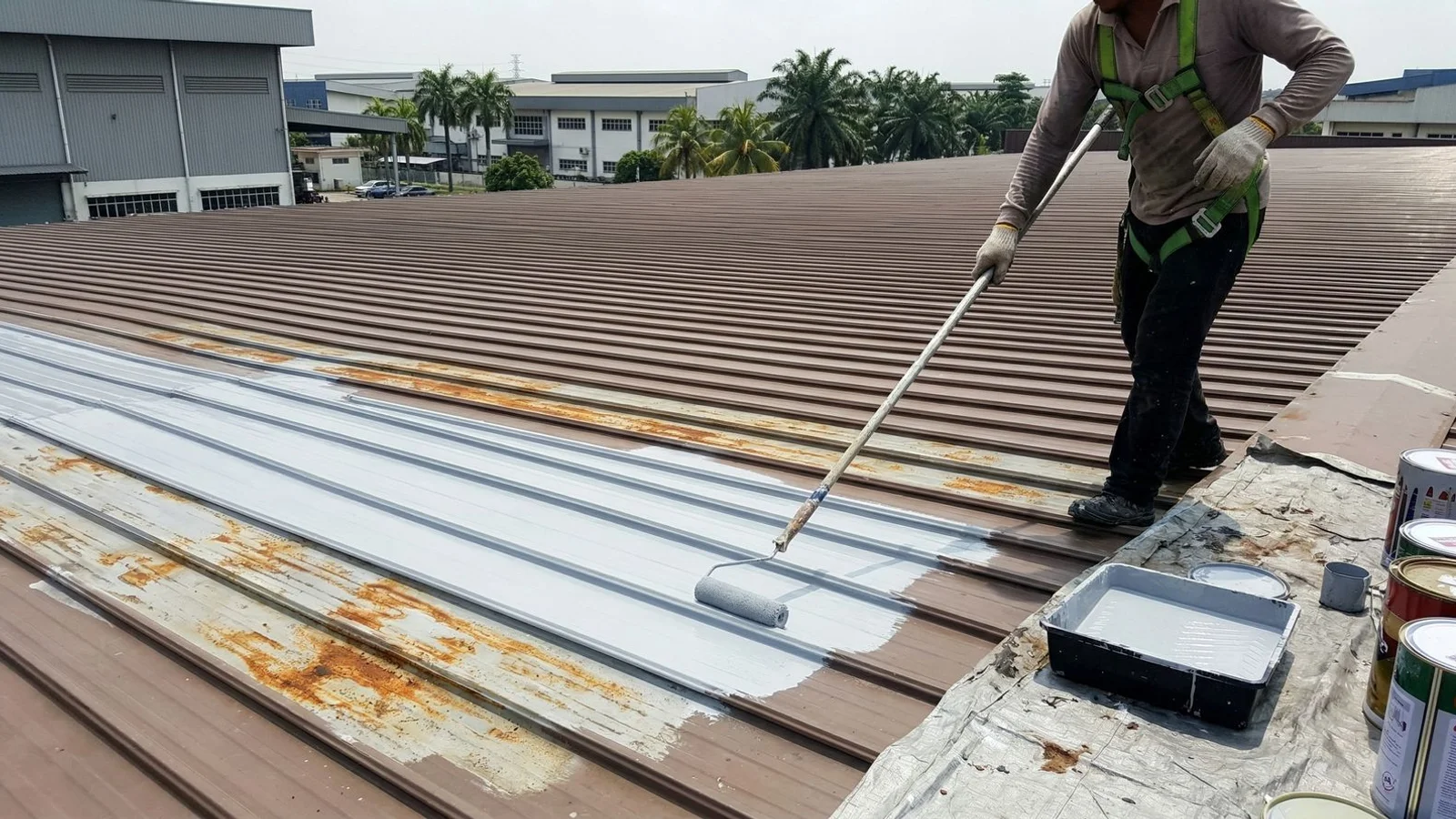
Across the entire roof, technicians apply a commercial-grade, phosphate-based rust converter. This chemical treatment changes active iron oxide into a stable, black ferric phosphate layer. A UV-stable topcoat follows the anti-corrosive primer to seal the surface.
Phase 3: Preventive Maintenance
A proactive schedule keeps the roof performing well. Annual or biennial inspections, targeted washer replacements, and a topcoat refresh every 5 to 7 years will maintain the protective barrier.
Our data shows this phased approach typically costs between RM 8 to RM 15 per square foot. Compared to the RM 25 or more required for a full tear-off and replacement, this strategy costs just 20 to 35% of a new roof. For a busy warehouse where production cannot stop, this is often the only sensible financial path.
Step 3: The Right Materials
Cheap materials will ruin a factory roof repair faster than bad workmanship. The intense 2026 heat and humidity in Malaysia demand industrial-grade products. Selecting the correct compounds is non-negotiable for a lasting fix.
We insist on using specific material grades for every project. The critical components include:
| Material Category | Standard Choice (Avoid) | Industrial Grade (Required) |
|---|---|---|
| Fasteners | Standard rubber washers | Fresh EPDM washers rated for temperatures up to 150°C. |
| Rust Treatment | Basic primer painted over brown rust | Phosphate-based rust converter that neutralises oxidation. |
| Sealants | Cheap commercial silicone | Polyurethane (PU) sealants like Sikaflex PRO-3 or X’traseal PU-551. |
| Topcoats | Standard alkyd paints (prone to chalking) | UV-stable acrylic or water-based polyurethane membranes. |
Our repair crews have seen countless jobs fail because a contractor tried to save a few Ringgit on cheap silicone. Polyurethane sealants offer superior elasticity and handle thermal expansion without cracking.
What Makes Us Say “Replace Instead”
Extending the life of a roof is not always the right call. If the damage has crossed a certain threshold, attempting a repair is simply throwing good money after bad. A responsible assessment must identify these dealbreakers clearly.
We will immediately recommend a full replacement if we spot specific structural failures.
Key indicators that demand a new roof include:
- Widespread Perforation: Holes across the main panel field, not just surface-level rust.
- Compromised Structural Members: Severe corrosion on the C-purlins or underlying trusses that makes the roof unsafe to walk on.
- Severe Delamination: Panels splitting or peeling in more than 20% to 25% of the total roof area.
- The Economic Crossover Point: If the cost of repairing and extending the roof exceeds 50% of a full replacement quote, a new roof is clearly the better long-term investment.
Our team will always provide transparent cost comparisons. You need accurate data to make the best financial decision for your facility.
Book a Site Visit
For industrial inspections, larger sites are quoted separately from the standard RM30 residential fee. We hope this Industrial Metal Roof Rust Repair: A Guide for Klang Valley Factories helps you build a fully costed, phased work plan within a few working days.
We encourage you to act early before a minor leak becomes a major operational shutdown. If you are a factory or warehouse owner in the wider Klang Valley, do not wait for the heavy rains to expose your roof’s weaknesses.
Schedule a professional site visit this week to get ahead of the monsoon season.
For dependable roof leak repair services you can trust across the Klang Valley, reach out to the RLR Roofer team today.