Bituminous vs Liquid Membrane vs PU: Roof Waterproofing Compared
A plain-language comparison of the main roof waterproofing systems used in Malaysia, with pros, cons, and ideal use cases.
We often hear property owners in the Klang Valley asking for the absolute best product on the market. From our experience evaluating hundreds of local projects, getting the right match matters far more than buying the most expensive bucket of sealant.
This is exactly why we created this guide on Bituminous vs Liquid Membrane vs PU: Roof Waterproofing Compared.
You will quickly see why a real conversation with your contractor is better than a simple sales pitch.
We are going to break down the three main families of waterproofing used in Malaysia today. Let us look at the data, what it actually tells us, and how to choose the right protection for your building.
1. Liquid-Applied Polyurethane (PU) Membrane
Liquid-Applied Polyurethane is a multi-coat, seamless liquid applied by roller or spray, which cures into a flexible rubbery membrane bonded to the substrate. We frequently recommend PU for properties facing intense sun exposure. This liquid system cures into a seamless, highly flexible barrier that bonds directly to the concrete.
Where It Works Best
Our teams apply this system primarily on flat concrete roofs, car porches, balconies, and condo decks. Complex roof geometries with drains, parapets, upstands, and pipe penetrations benefit greatly from its seamless nature. You avoid the weak points found in overlapping joints.
Key Advantages and Regional Benefits
We appreciate how well PU handles the thermal expansion typical of Malaysian weather. Concrete roofs in Kuala Lumpur can easily reach surface temperatures of 40 degrees Celsius during the afternoon. This heat causes structural movement that rigid coatings cannot survive.
A quality PU product stretches with the building. Top local brands like Nippon Paint with their NippoSEAL FLEX 200 or Sika with the Sikalastic-632 R series offer excellent UV stability when finished with a proper topcoat.
The Hidden Drawbacks
Our installers will warn you that PU systems demand perfectly dry, clean substrates before application. Surface preparation dictates the entire success of the project. Any trapped moisture will cause the rubbery membrane to blister and peel away from the concrete. Cost is also a factor.
| Feature | Details |
|---|---|
| Average Cost | RM25 to RM45 per sq ft installed |
| Flexibility | High (Excellent for thermal movement) |
| Application | Roller or spray (Seamless) |
| Weakness | Highly sensitive to trapped moisture |
2. Bituminous Waterproofing (Torch-On and Cold-Applied)
Traditional and Reliable Protection
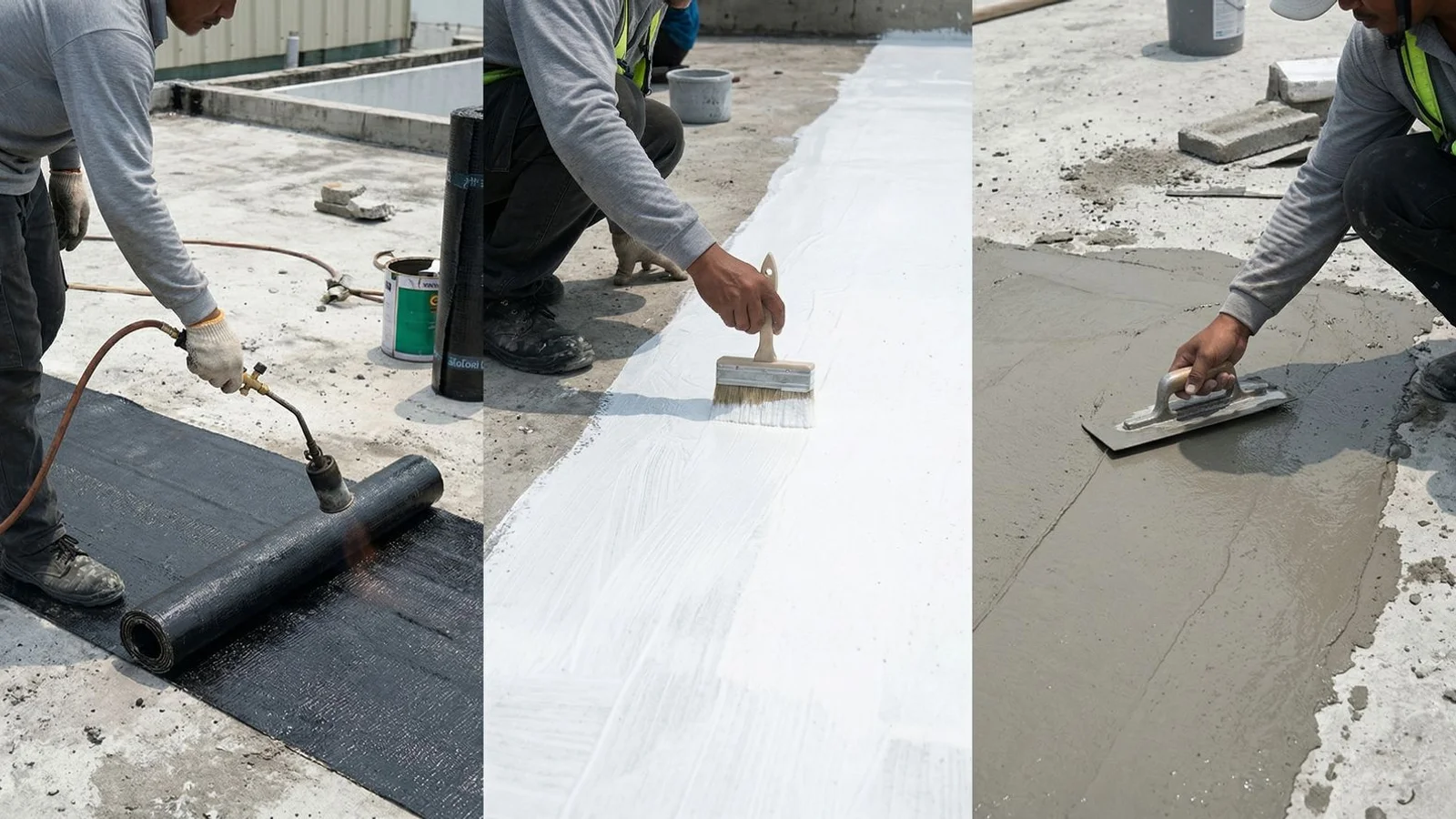
We see bituminous waterproofing on countless older commercial buildings across the region. This system uses rolls of bitumen membrane, usually 3mm to 4mm thick, which are either melted onto the surface using a gas torch or applied as a self-adhesive cold system. The thick mat provides a heavy-duty physical barrier against standing water.
Ideal Use Cases
Our preferred application for this material is on large, flat commercial roofs with very simple geometries. Low-traffic industrial spaces are perfect candidates. This system excels in situations where the cost per square foot matters more than dealing with complex detailing.
Climate Challenges in Malaysia
We must point out a major vulnerability with torch-on systems in our specific climate. The high ambient humidity in the Klang Valley often traps moisture beneath the thick bitumen mat during installation.
When the intense afternoon sun hits the black surface, that trapped water turns to vapour and builds pressure. This pressure eventually pops the seams or creates massive bubbles.
Common Pitfalls
Joints and laps remain the primary weak points for this material. Every single overlapping edge acts as a potential failure path if the torching was inconsistent. Products from established names like Cemseal, specifically their APP TOM modified bitumen rolls, offer great quality, but bad workmanship will still cause leaks.
| Feature | Details |
|---|---|
| Average Cost | RM15 to RM25 per sq ft installed |
| Flexibility | Moderate (Less elastic than PU) |
| Application | Torch-on rolls or self-adhesive |
| Weakness | Joints can fail, traps moisture easily |
3. Cementitious Waterproofing
The Rigid Chemical Bond
We utilize cementitious waterproofing for structures that constantly interact with water. This system consists of a cement-based slurry, often polymer-modified, applied directly to the concrete with a brush or trowel. It bonds chemically with the host substrate to block water ingress.
Where It Outperforms the Rest
Our crews rely on this method for basements, below-grade concrete, water tanks, retaining walls, and concrete slabs. It provides a highly breathable layer. Trapped moisture can actually escape through the coating without causing the material to blister or peel.
Limitations and Top Products
We never use cementitious coatings over flexible or moving joints. Because the cured material is rigid, it will crack instantly if the underlying structure shifts or expands.
It also requires a separate topcoat if exposed to direct UV rays. Popular materials like Pentens T-305TH are industry standards here because they offer a slightly flexible cementitious formula, but they still cannot match the elasticity of pure PU.
| Feature | Details |
|---|---|
| Average Cost | RM18 to RM30 per sq ft installed |
| Flexibility | Low (Rigid, prone to cracking with movement) |
| Application | Brush or trowel slurry |
| Weakness | Cannot handle structural shifting |
Decision Guide for Bituminous vs Liquid Membrane vs PU: Roof Waterproofing Compared
We follow a strict assessment protocol to pair the right chemistry with the right architecture. Heavy rain events in 2026 continue to test the drainage capacity of flat roofs across Selangor and KL. Poor drainage combined with the wrong membrane guarantees a failure.
Matching System to Structure
- Flat concrete residential roofs: Liquid-applied PU membranes with a UV topcoat work best for these areas, especially if they double as a car porch or deck. The seamless finish handles thermal cycling perfectly.
- Large flat commercial roofs: Bituminous systems offer great cost-effectiveness on simple layouts. Our recommendation switches to PU only if the roof has dozens of upstands, air conditioning units, and pipe details.
- Below-grade structural concrete: Cementitious coatings provide the best protection for basement walls or planter boxes. Active cracks require a specialized PU injection first, followed by the surface slurry.
The Things That Matter More Than The System
We have an uncomfortable truth to share about the local construction industry. The specific system you pick matters far less than how the contractor installs it.
In Malaysia, nine out of ten waterproofing failures trace back to bad surface preparation, skipped detail work around parapets, or application during the wrong weather conditions. It is rarely the fault of the product chemistry. If the concrete is wet, actively cracking, or spalling, the new system simply will not bond.
Our scope of work always starts with an honest substrate assessment. The team will tell you exactly what needs fixing before the waterproofing gets applied. This ensures the money you spend actually protects your roof for its full service life.
Book a flat-rate RM30 onsite evaluation today. You have read the breakdown of Bituminous vs Liquid Membrane vs PU: Roof Waterproofing Compared. We will evaluate your site and tell you which system genuinely fits your roof. A lasting solution always beats the highest markup.
For dependable roof leak repair services you can trust across the Klang Valley, reach out to the RLR Roofer team today.