How Often Should You Re-Waterproof Your Roof in Malaysia?
Typical service intervals for different roof waterproofing systems in Malaysia's tropical climate, and the signs that yours is due.
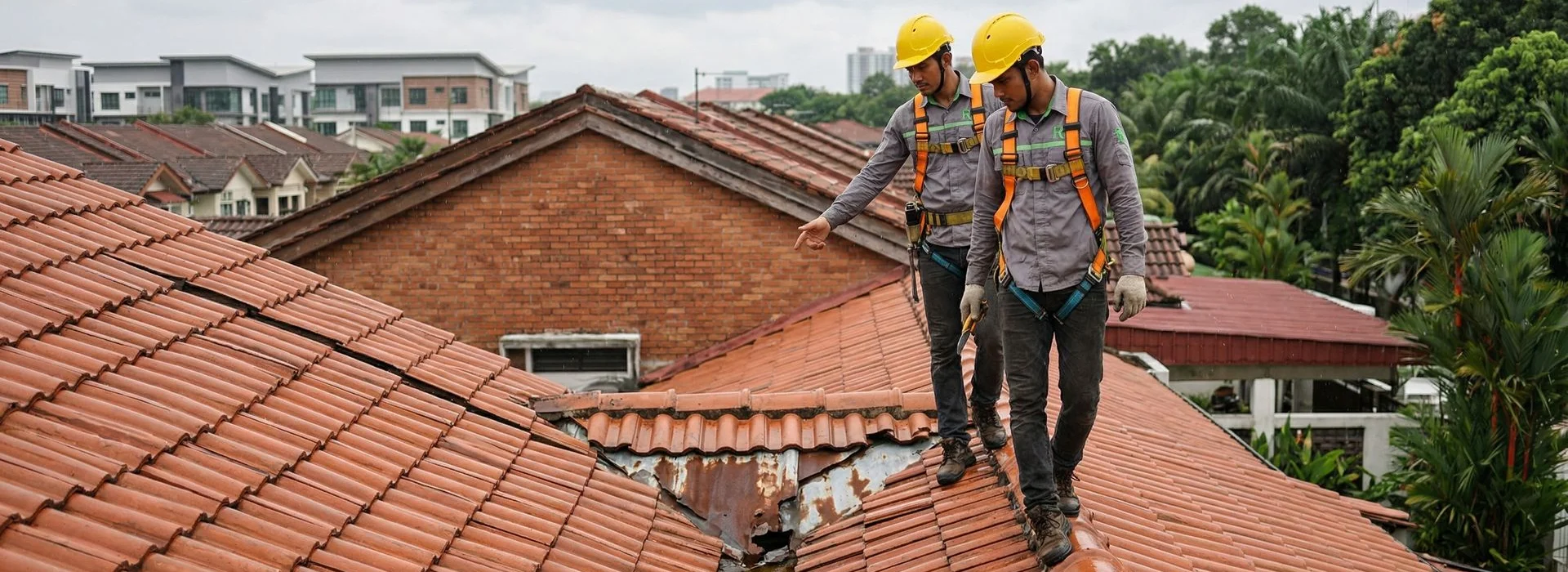
We often see homeowners treating waterproofing like a permanent concrete foundation.
The truth is much different in a tropical climate.
Heavy monsoon rain and intense thermal cycling wear down every protective layer on the market.
Our Klang Valley clients usually ask a very direct question.
They constantly ask, how often should you re-waterproof your roof in Malaysia?
Clear answers help prevent catastrophic water damage.
We will break down the realistic timelines across a few key areas.
- Average service lives of popular materials.
- Warning signs of membrane failure.
- Practical maintenance schedules.
Let’s look at the data to understand what it actually tells us.
You will also discover a few practical ways to respond.
How Often Should You Re-Waterproof Your Roof in Malaysia? Typical Timelines
Our team relies on hard data from weekly site inspections rather than generic marketing claims.
Kuala Lumpur averages over 2,400mm of annual rainfall.
That massive volume of water destroys substandard work quickly.
We evaluate systems based on competent installation and regular maintenance.
The system you choose dictates your long-term maintenance costs.
Tropical climates demand highly durable materials to survive the elements.
Our engineers use this exact data to help property owners budget accurately.
Below is a realistic guide to what you can expect.
Prices reflect current market rates for professional installation.
| Material Type | Popular Local Brands | Expected Lifespan | Average Cost (RM per sq ft) |
|---|---|---|---|
| Polyurethane (PU) | Nippon Flex 200, Pentens T200 | 8 to 15 years | RM10 to RM15 |
| Bituminous Torch-On | Sika, Boscoseal | 15 to 20 years | RM6 to RM10 |
| Cementitious Coating | SikaTop Seal 107 | 10 to 15 years | RM2 to RM5 |
| Acrylic Elastomeric | Nippon Roof Coating | 4 to 7 years | RM4 to RM8 |
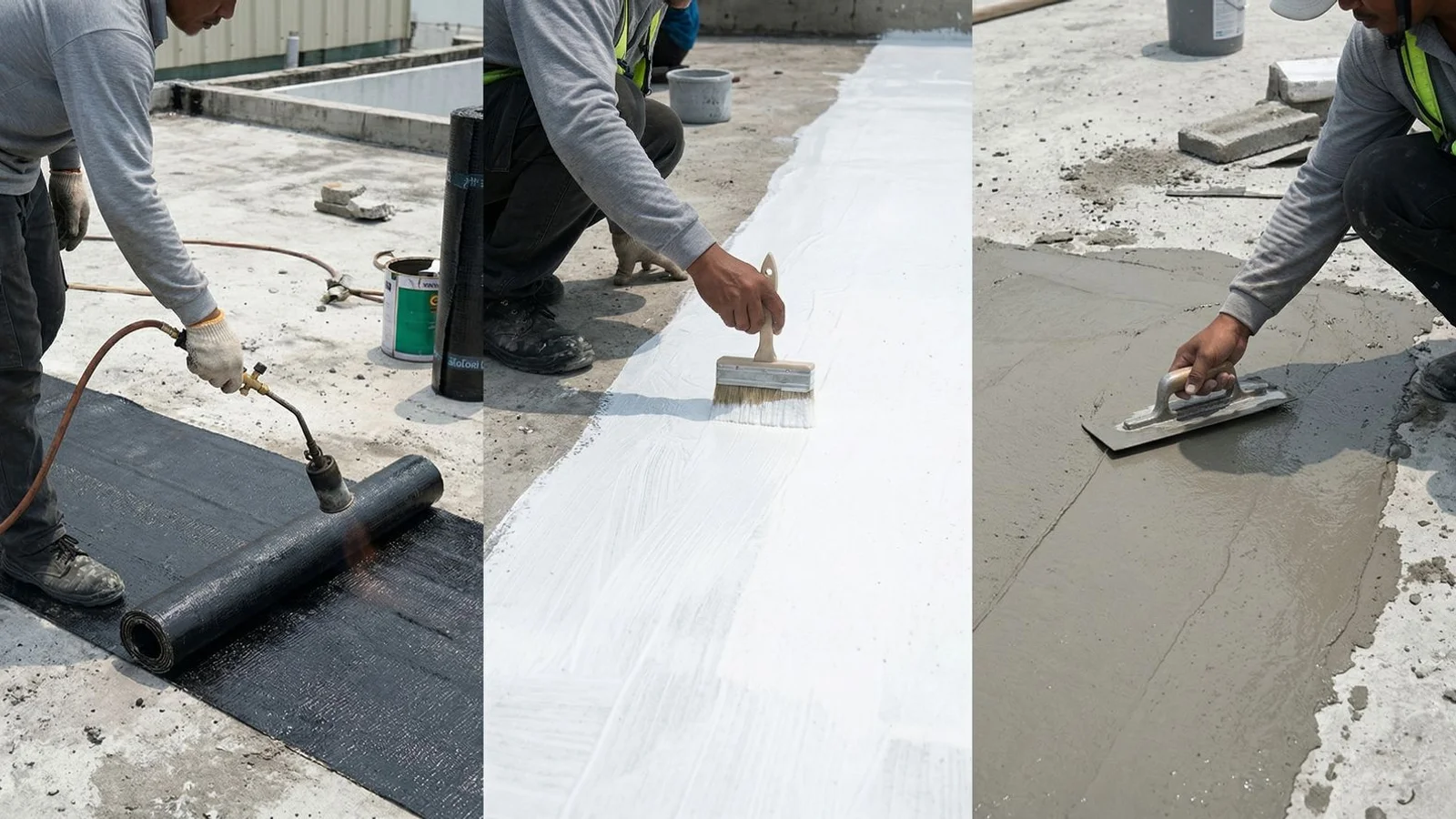
Polyurethane (PU) Liquid Membranes
We frequently recommend PU systems for exposed residential concrete roofs.
Polyurethane systems cure into a flexible film that stretches with thermal movement.
High-quality options like SikaCoat or Nippon Flex 200 typically last 8 to 15 years.
Our installers know that replacing the UV topcoat every 5 to 7 years is mandatory.
Keeping that top layer fresh guarantees the maximum lifespan.
This liquid membrane usually costs between RM10 and RM15 per square foot.
We find this balance of price and performance ideal for most homes.
Proper application ensures long-lasting defence against heavy rain.
Fast curing times make this a popular choice.
Bituminous Torch-On Membranes
Our crews handle many commercial buildings using these modified bitumen systems.
Contractors apply this thick material using an open flame to create a watertight seal.
A properly installed bituminous roof will easily last 15 to 20 years.
We consider this method perfect for large concrete slabs exposed to direct sunlight.
The thick barrier completely blocks water penetration.
Expect to pay RM6 to RM10 per square foot for professional installation.
Our safety protocols ensure the concrete substrate is completely sound before torching.
The seamless finish provides incredible durability over decades.
Minimal maintenance is required after the initial setup.
Cementitious and Acrylic Options
We often see cementitious coatings used beneath tiles or in shaded areas.
Products like SikaTop Seal 107 provide excellent protection for 10 to 15 years if shielded from direct sun.
Acrylic elastomeric coatings are much cheaper but only last 4 to 7 years.
Our technicians use the acrylic layer as a quick refresh layer rather than a standalone solution.
Both options offer budget-friendly protection starting around RM2 to RM5 per square foot.
Proper surface preparation is essential for these mixtures to bond correctly.
We apply these coatings strictly according to manufacturer specifications.
Strict adherence to mixing ratios guarantees the best results.
Fast application keeps labour costs low.
Signs Your Waterproofing Is Due
Our inspectors urge clients to watch their actual roof rather than relying solely on the calendar.
The transition from a minor issue to a major leak happens quickly in our climate.
A quick visual check can save thousands in structural repairs.
We look for these exact warning signs before making any recommendations.
These specific red flags appear during almost every site visit.
You should schedule a professional assessment if you spot any of these indicators.
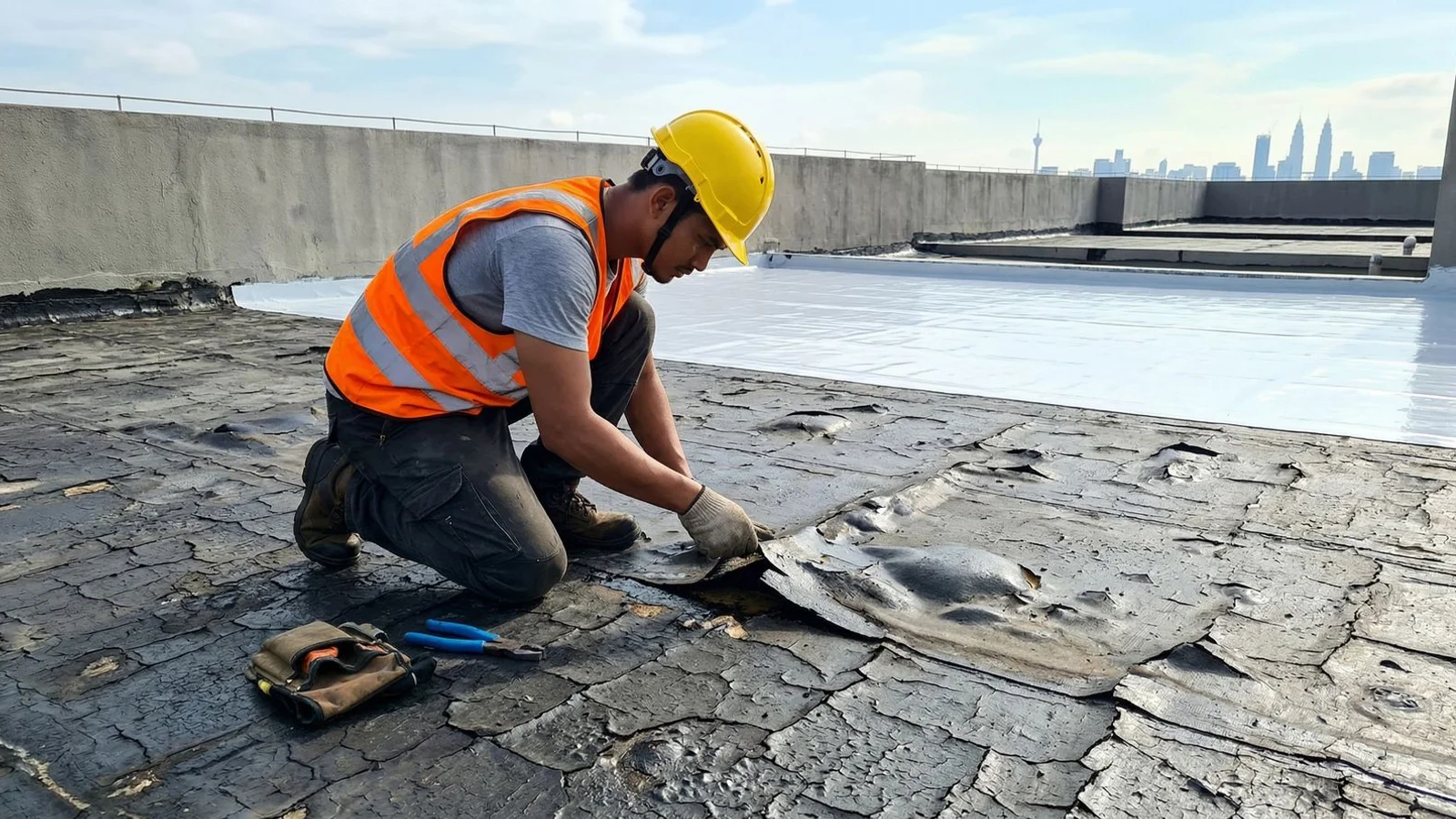
- Spiderweb cracks or crazing on the surface of the PU membrane.
- Powdering and chalking of the topcoat when you rub a finger across it.
- Exposed fabric scrim where the coating has completely worn through.
- Blistering or delamination pulling away from the concrete substrate.
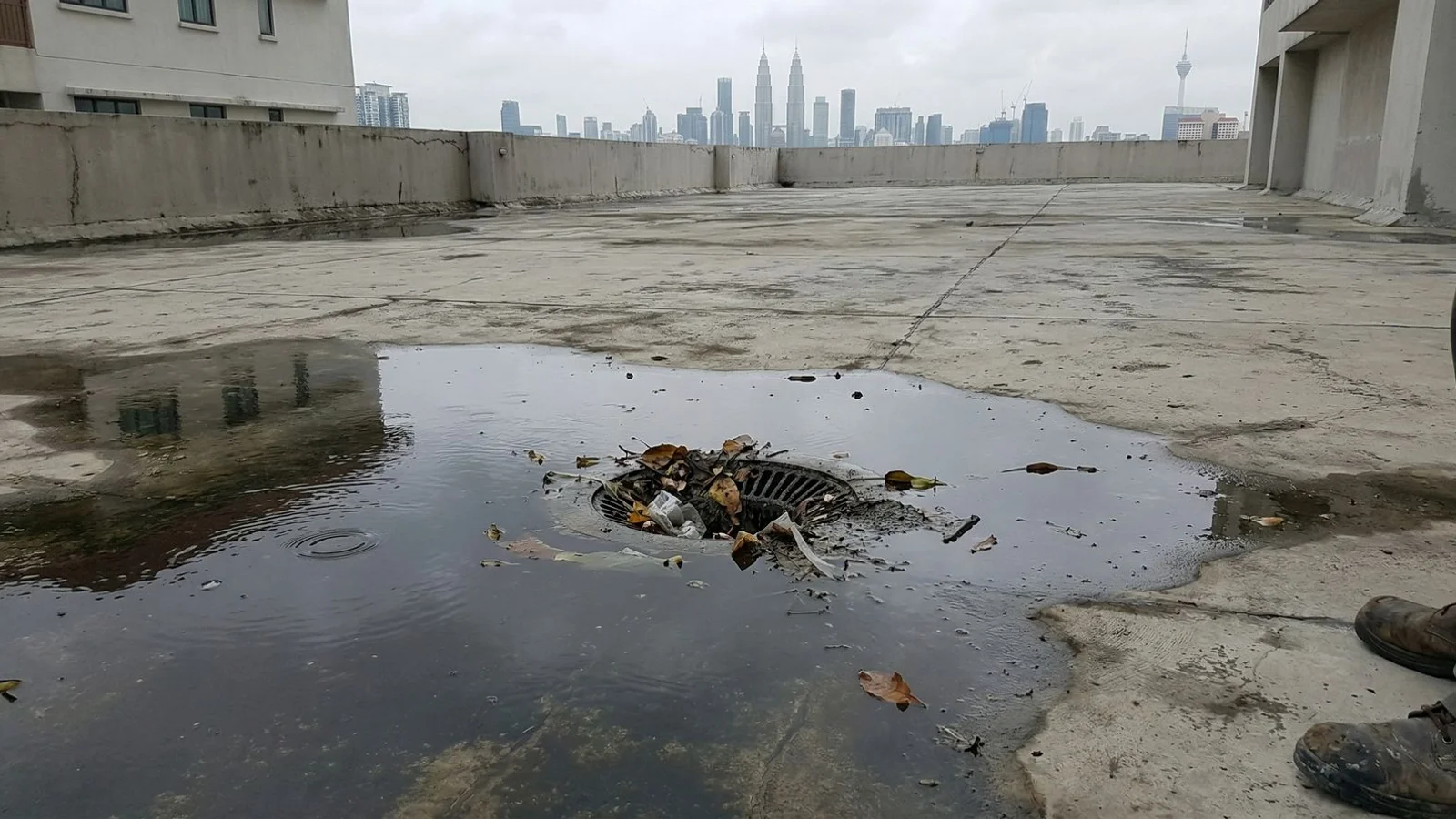
- New ponding water in areas that previously drained perfectly well.
- Rust streaks near metal flashing or under heavy Daikin and Panasonic air conditioning compressors.
Our team advises immediate action if you notice two or more of these symptoms at once.
The waterproofing is officially failing at that point.
A total rebuild becomes necessary to restore protection.
The Essential Topcoat Refresh
We consistently find that property owners overlook the sacrificial UV topcoat.
Roof temperatures in Malaysia frequently exceed 40 degrees Celsius.
This intense heat bakes the underlying waterproofing layer if left unprotected.
Our most practical tip is to refresh this topcoat every 5 to 7 years.
Maintaining that layer extends the life of a membrane like Pentens T200 by up to 50 percent.
Regular touch-ups block harmful ultraviolet radiation effectively.
The topcoat is a sacrificial layer that takes the brunt of the UV damage. Keeping it fresh is the easiest way to protect your primary investment.
We consider this RM1,500 maintenance coat to be the ultimate cost-saving measure.
Skipping a simple topcoat forces an expensive total replacement much sooner.
Neglected systems degrade completely within just four years.
Our goal is to maximize the lifespan of your original installation.
An early failure creates unnecessary financial strain for the building owner.
Preventive care is always cheaper than emergency repairs.
Environmental Factors That Accelerate Damage
We evaluate the specific environment because certain conditions shorten every material’s lifespan.
The standard timeline goes out the window when a roof faces harsh local elements.
Your property might need more frequent attention based on its location.
Our teams identify several common culprits that ruin protective coatings early.
Avoid these situations to get the maximum value from your investment.
Simple awareness prevents years of frustration.
- Heavy foot traffic from maintenance workers walking directly on the membrane.
- Industrial emissions and acid rain commonly found in manufacturing zones like Shah Alam.
- Poor drainage causing constant ponding water after heavy monsoon showers.
- Missed detail work around parapets, gutters, and drainage pipes.
We always pay special attention to those vulnerable junction points.
A perfect flat surface will still leak if the corners are poorly sealed.
Intricate detail areas require extra care during application.
A Practical Maintenance Schedule
Our project managers implement a structured maintenance cadence for all Klang Valley clients.
A proactive approach keeps your total cost of ownership as low as possible.
Regular checks prevent the sudden monsoon leaks that force reactive spending.
We built this straightforward routine to be simple to follow and highly effective.
Property owners appreciate having a clear timeline to reference.
Consistent habits protect the building structure long-term.
- Every 12 months: Clear all drains and gutters while doing a visual inspection for early warning signs.
- Every 3 years: Hire a professional to check membrane condition, cracks, and complex detailing.
- Every 5 to 7 years: Refresh the sacrificial UV topcoat on acrylic or PU systems.
- Every 8 to 15 years: Budget for a complete system assessment and full re-waterproofing.
Our historical data shows this exact timeline catches 90 percent of issues before they breach the concrete.
Sticking to this plan gives you complete peace of mind during the rainy season.
Major structural damage becomes highly unlikely with consistent care.
Professional Assessment and Next Steps
We regularly meet owners who have no idea what system is currently protecting their building.
Identifying the age and material type is difficult without an experienced eye.
A quick site visit clears up the confusion immediately.
Our RM30 onsite inspection provides a complete evaluation of your existing setup.
You will walk away with a written plan detailing exactly what to do next.
- Detailed age identification.
- Material compatibility checks.
- Step-by-step action plans.
Taking that first step prevents minor issues from escalating.
We assess several critical areas during our walk-through.
Knowing how often should you re-waterproof your roof in Malaysia empowers you to make the right financial decisions.
Protect your property before the next major storm arrives.
A proactive assessment is the single best investment you can make for your building’s longevity.
We are ready to help you schedule your comprehensive roof assessment.
Start the process today to secure your building.
Peace of mind is just one appointment away.
For professional roof leak repair in Kuala Lumpur you can trust across the Klang Valley, reach out to the RLR Roofer team today.