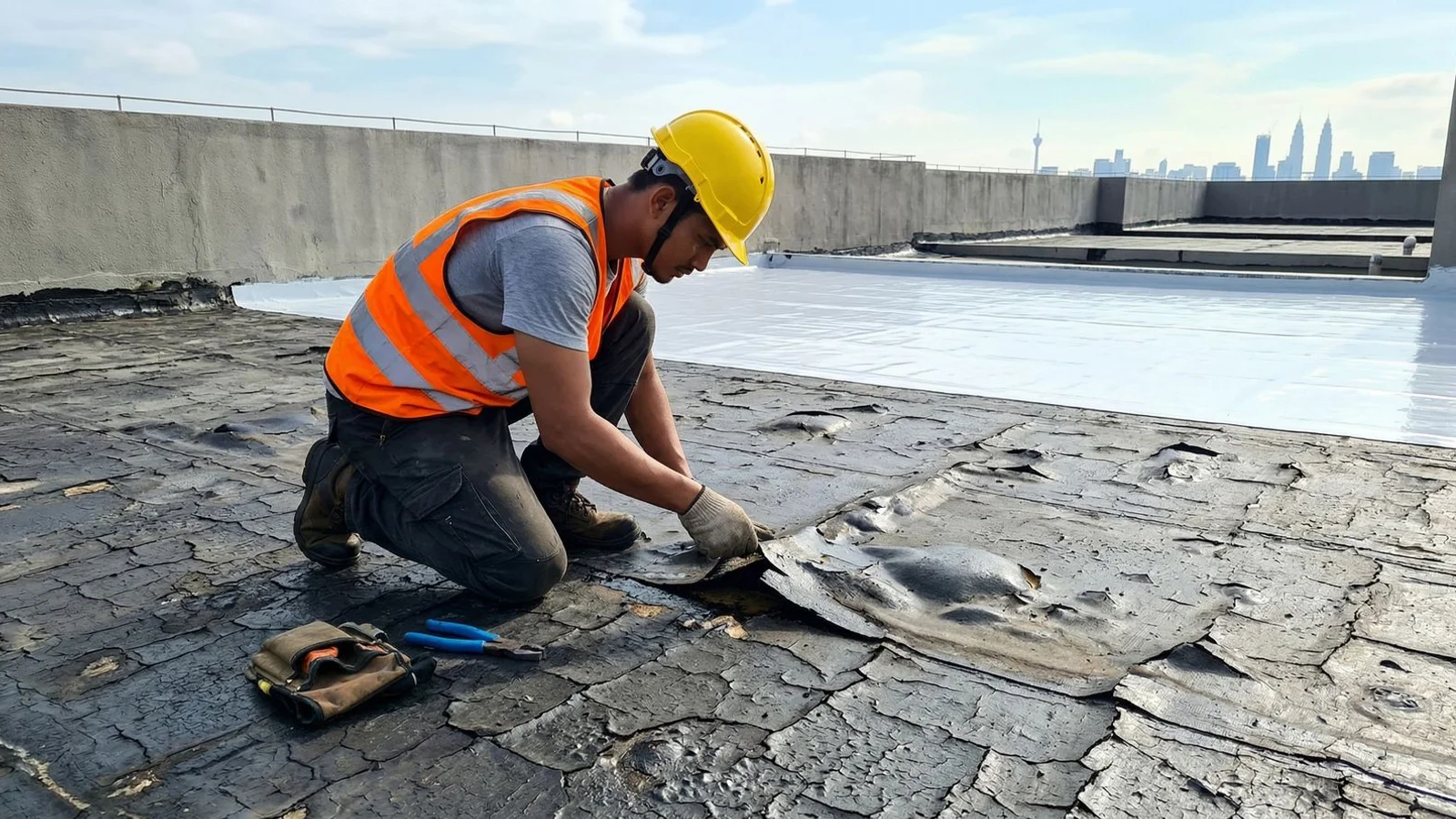
Why Your Flat Concrete Roof Keeps Pooling Water (and How to Fix It)
Ponding water on a flat concrete roof is a warning sign. Here's what causes it in KL buildings and the waterproofing fixes that actually last.
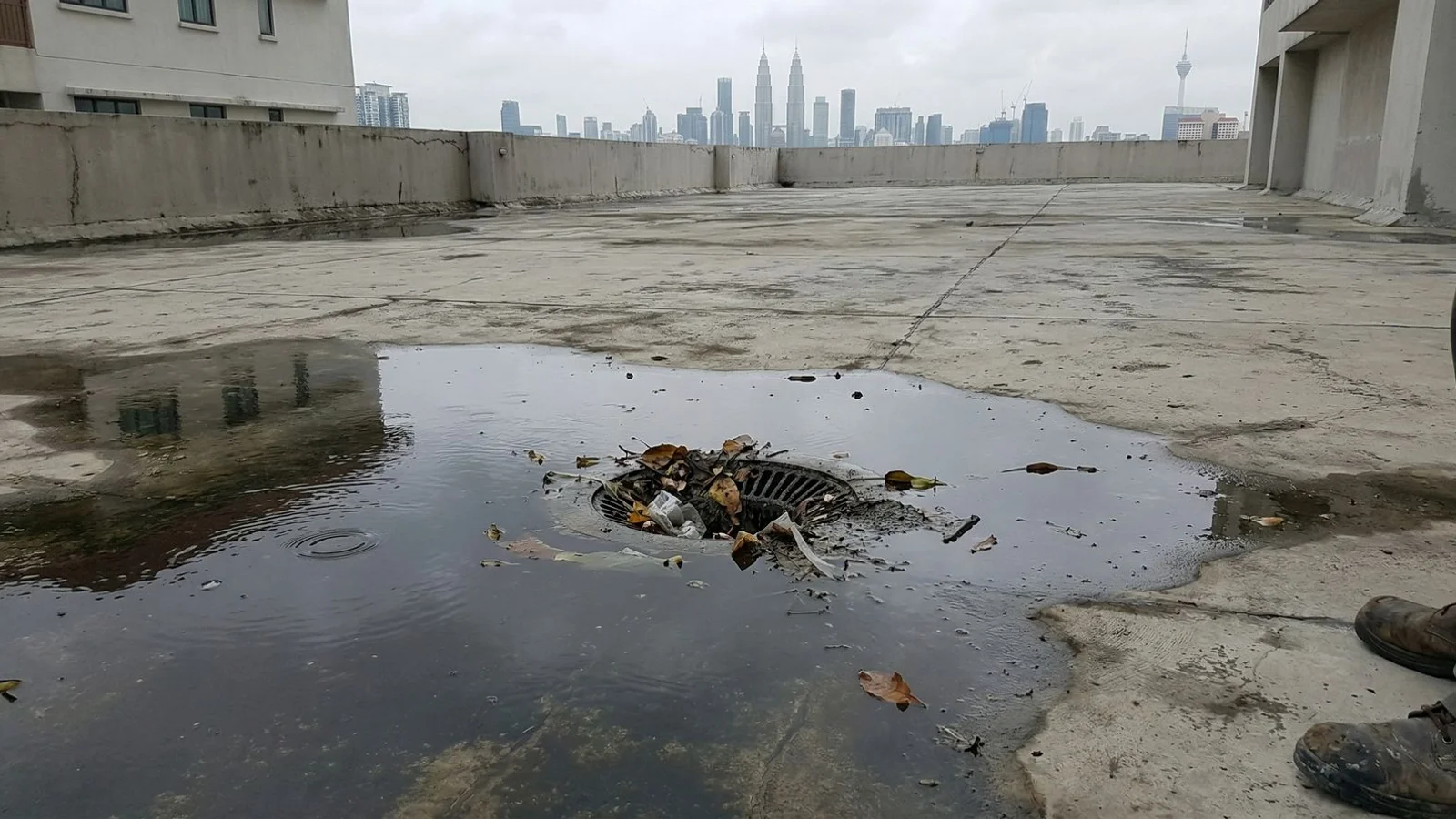
You probably know that a persistent puddle on a commercial or residential roof is a giant red flag. Understanding exactly why your flat concrete roof keeps pooling water (and how to fix it) is the first step to protecting your property. That standing water is called ponding, and it is a quiet destroyer of waterproofing systems across Malaysia.
We operate as a professional service team handling these repairs daily, observing this exact issue constantly after heavy Klang Valley downpours. A puddle that remains for more than 48 hours is actively breaking down the concrete beneath it.
Our team knows that recent weather data shows Kuala Lumpur experiencing up to 155mm of rain in just two hours during monsoon transitions.
This sheer volume of water ruthlessly exposes any drainage flaw.
We will outline exactly why these roofs fail to drain and the specific damage that trapped water causes. The following sections break down the precise, data-backed solutions required to fix the slope and permanently protect the property.
Why Your Flat Concrete Roof Keeps Pooling Water (and How to Fix It)
A well-designed flat roof is never truly flat. The Malaysia Uniform Building By-Laws (UBBL) actively require roofs to have sufficient slope to prevent stagnant water.
We strictly adhere to a minimum fall ratio of 1:80 or 1:100 directed at the drainage points. This specific angle ensures water drains within 24 hours of the rain stopping.
Our inspections across Klang Valley buildings reveal pooling typically stems from four distinct structural or maintenance failures.
- Original construction shortcut: The concrete slab was poured without an adequate fall, or the crucial lightweight foam concrete screed was skipped entirely.
- Settlement: The building has shifted slightly over the years, creating low points the original design did not anticipate.
- Drainage blockage: The floor drain, scupper, or downpipe is clogged with debris, so water cannot escape even though the fall is mathematically correct.
- Failed previous waterproofing: Old bituminous layers that were poorly fused or lifted membranes form artificial dams that trap rainwater.
What Ponding Water Actually Does
Property owners frequently ask if they can just leave a small puddle alone. The answer is a definitive no.
We see immense structural decay caused by water left sitting for more than two days. During a typical Kuala Lumpur afternoon, surface temperatures on a concrete roof easily exceed 50 degrees Celsius.
Our testing shows that ponded water acts like a magnifying glass under this intense sun. This concentrated heat accelerates the UV degradation of the waterproofing membrane beneath it.
| Drainage Condition | Membrane Lifespan | Primary Threat Level |
|---|---|---|
| Proper 1:80 Fall (Fast Drain) | 15-20 Years | Standard UV Exposure |
| Permanent Ponding (Stagnant) | 3-5 Years | Hydrostatic Pressure & Algae |
The trapped moisture also exerts constant hydrostatic pressure on every joint and seam. We know a seam that handles standard storm runoff perfectly well will eventually fail under the weight of a permanent puddle.
This stagnant environment actively breeds aggressive algae and mould. We regularly replace standard acrylic coating systems that have been literally eaten away by these biological growths.
Ponded water also leaves behind hardened mineral deposits when it finally dries. These deposits shrink and pull on the coating surface, creating microscopic cracks.
The Real Fix: Slope, Not Sealant
The most common shortcut is to simply paint another thick layer of waterproofing directly over the ponding zone. This strategy fails completely.
Our crews spend countless hours fixing roofs where someone tried to seal a puddle instead of fixing the slope. Adding more sealant just creates a thicker dam that traps even more water.
The only permanent solution is to restore the correct drainage pathways. We approach this using four distinct methods depending on the severity of the structural flaw.
Methods to Restore Roof Drainage
- Clearing existing drainage: If the original fall is correct, a blocked drain is the obvious culprit. Cleaning the scupper or downpipe may fully resolve the issue.
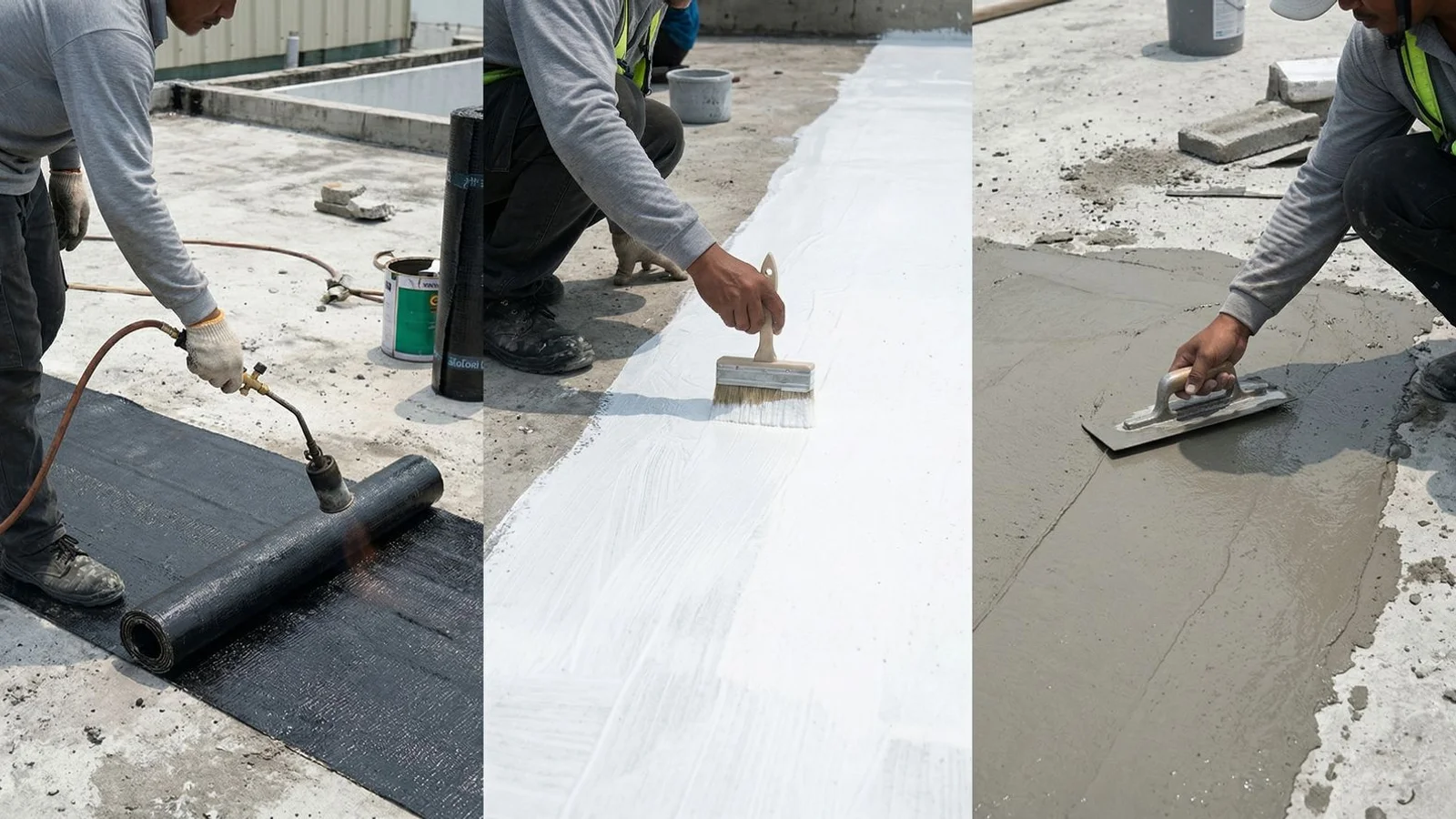
- Re-screeding to introduce fall: We pour a sand-cement or lightweight foam concrete screed over the existing slab to create a proper 1:80 slope. This is the correct action when the original construction lacked any built-in fall.
- Targeted build-up: We utilize a self-levelling compound or tapered insulation system to raise the low spots before applying any new waterproofing.
- Adding a new drainage point: Creating a brand new floor drain is sometimes the most efficient solution if the low point is too far from existing scuppers.
Applying Industrial-Grade Membranes
Once the drainage is flowing perfectly, the final step requires a resilient coating. We typically apply an industrial-grade liquid polyurethane (PU) membrane, such as Sikalastic 632R or a Mapei Aquaflex system.
These specific PU membranes are crucial for Malaysian roofs because they cure rapidly and retain high elasticity. We prefer PU over cheap acrylics due to essential thermal movement.
The concrete slab expands and contracts daily in the tropical heat, and the PU membrane stretches right along with it without snapping.
Pricing Reality
A targeted drainage fix on a small residential flat roof in the Klang Valley usually starts around RM2,500 to RM6,000. This baseline estimate includes the necessary high-pressure cleaning, the new concrete screeding, and the complete waterproofing reapplication.
We find that breaking down the material costs helps property owners understand the value of a permanent fix. Current 2026 market rates for a premium polyurethane liquid membrane range between RM107 and RM161 per square metre.
Our quotes factor in this material cost alongside the specialized labour required for precise slope correction. A larger commercial roof requiring significant re-sloping and structural repair easily exceeds RM25,000+.
We provide a comprehensive RM30 onsite inspection to assess the exact square footage and slope deficit. This inspection delivers a firm, written quote before any work commences, ensuring complete financial transparency.
What Not to Do
Property owners often make matters worse by attempting quick, cheap fixes. We strongly advise against letting a roofer paint thick layers of cheap bitumen directly over a ponding zone.
This creates a temporary illusion of safety while water continues to rot the layers beneath it. Another major mistake is installing a new drain without properly measuring the existing fall.
Our technicians frequently see new drains that simply shift the puddle to a slightly different location on the roof.
- Do not ignore ponding for more than a single monsoon season, as the structural damage compounds rapidly.
- Avoid using standard hardware store acrylic paints, which lack the elasticity to survive the 50-degree Celsius surface heat.
Securing a Permanent Solution
Waiting for a roof to leak before addressing a permanent puddle is a costly mistake. We encourage proactive maintenance before the next monsoon cycle begins.
A small puddle today will turn into severe structural decay by next year. Our company waives the initial inspection fee entirely when you approve the repair work.
You receive a straight answer and a transparent written quote immediately.
We will clearly tell you whether the property requires a simple drain clearing, a partial re-screed, or a full waterproofing rebuild.
If you are tired of wondering why your flat concrete roof keeps pooling water (and how to fix it), book the RM30 inspection today.
For professional roof leak repair and waterproofing you can trust across the Klang Valley, reach out to the RLR Roofer team today.