Tile Roof Leak Repair for KL Terrace Houses: What to Expect
A practical walk-through of how we diagnose and repair tile roof leaks on older terrace houses in Kuala Lumpur and Petaling Jaya.
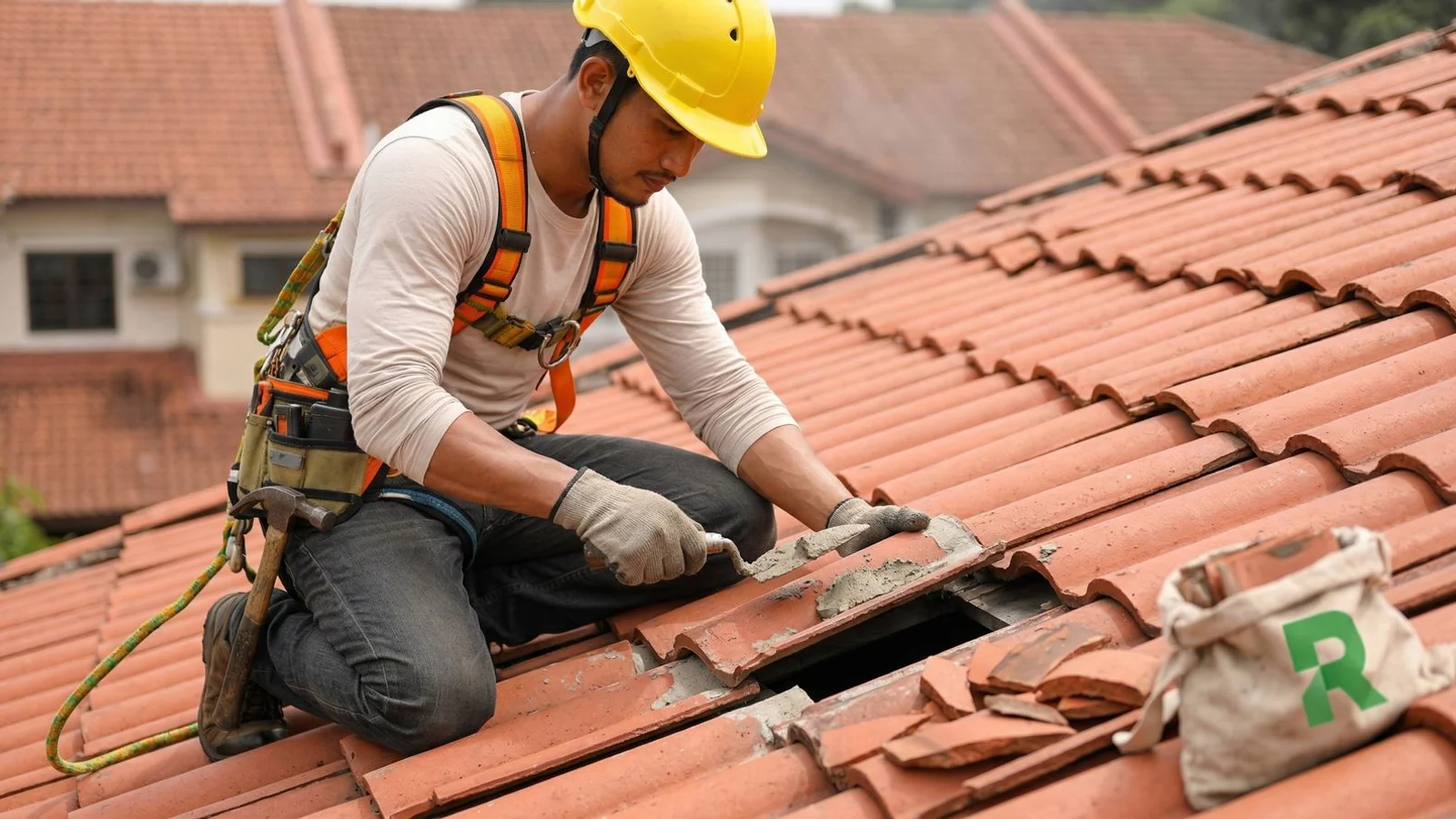
Our team has inspected hundreds of older properties across Kepong, PJ, Cheras, Ampang, and Damansara. You know how frustrating it is when monsoon rain finally breaches a 20-year-old clay or concrete tile roof. If you need a tile roof leak repair for KL terrace houses: what to expect is a straightforward process focused on targeted, long-lasting fixes.
We consistently see the same accumulated defects causing major interior damage. The Klang Valley receives an average annual rainfall of over 2,300 mm, putting immense pressure on these aging structures.
Let’s look at the data, what it is actually telling us, and explore a few practical ways to respond.
The Usual Suspects
On an older KL terrace, water ingress almost always traces back to one of a handful of specific failure points. We consistently find that 90 percent of the leaks originate from these five common areas. Finding the exact source requires understanding how local materials degrade over time.
Common Failure Points
- Cracked or slipped tiles: This often happens near the ridge or valleys, particularly with older BMI Monier Elabana profiles.
- Failed ridge cap mortar: Houses built in the 1990s used traditional cement-bedded ridges, which crack after 15 to 20 years under the intense Malaysian sun.
- Rusted valley flashing: The metal troughs between roof sections easily corrode if leaves and debris trap moisture.
- Deteriorated wall flashing: The junction between your roof and the adjoining terrace neighbour is a high-risk zone for water entry.
- Broken underlay (sarking): Previous contractors often lift and badly re-lay tiles, tearing the protective waterproof membrane underneath.
Our daily repair logs confirm these are well-understood and highly repairable problems. Homeowners can save significant money by catching these issues early.
Step 1: The Interior Check
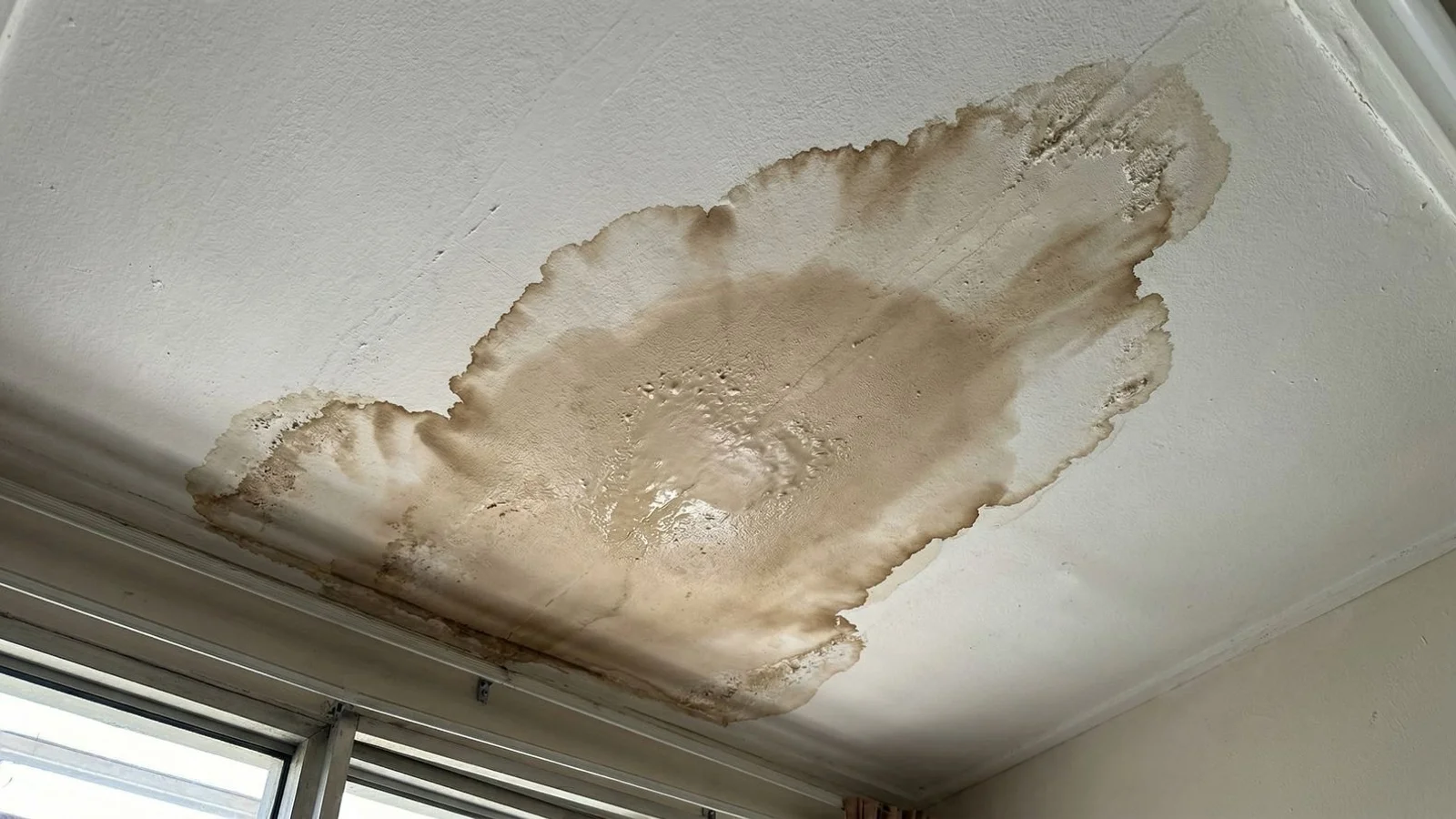
Before we even climb the roof, our inspection begins inside the house. The location and shape of a ceiling stain tell us a wealth of information about where water has been travelling. We use a Protimeter moisture meter to map the hidden dampness spreading across the plasterboard.
Moisture often runs along wooden roof trusses before dripping down, meaning the visible stain is rarely directly below the broken tile. A stain near the outer wall strongly points to flashing degradation or gutter overflow. Our technicians look for stains directly under a shared boundary wall, which almost always means complex flashing work is required.
Identifying the exact travel path of moisture prevents unnecessary tile removal and saves you money on labour costs.
Step 2: The Roof Survey
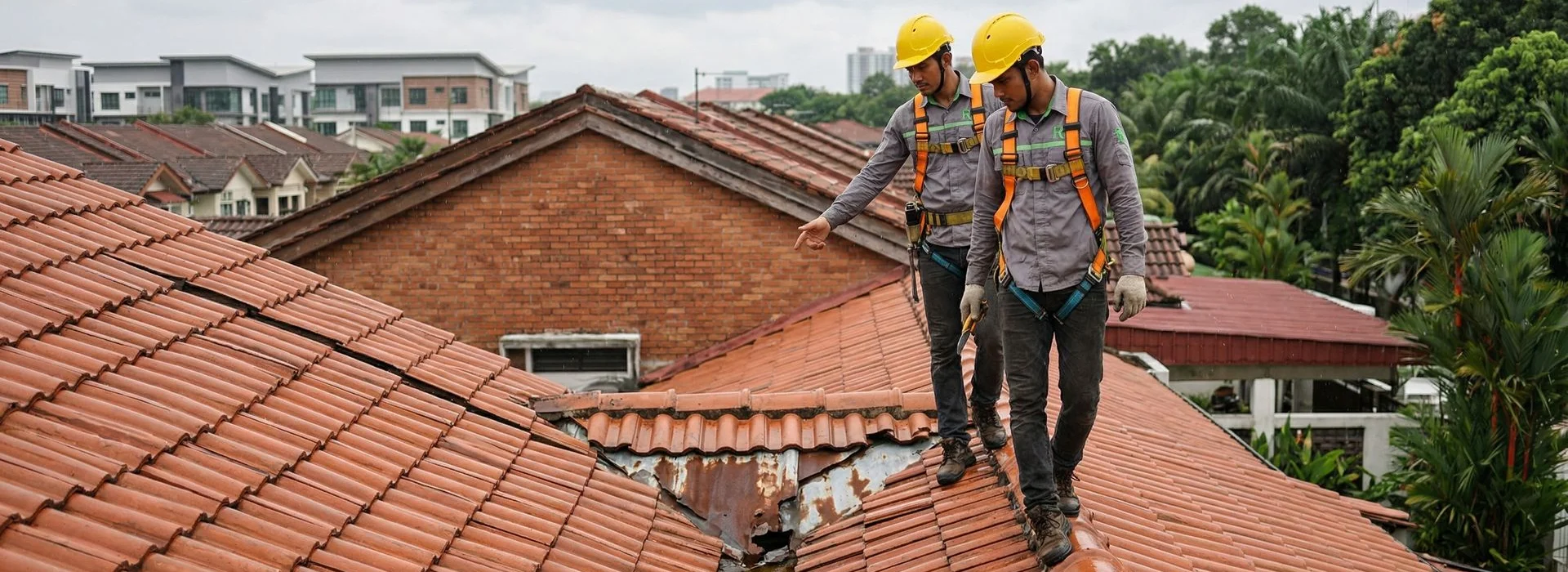
Once we have a solid theory, the investigation moves to the exterior. We minimize foot traffic because 20-year-old concrete tiles become brittle and can easily crack under human weight. This modern approach often involves launching a DJI Mini drone for a preliminary visual sweep before anyone steps on the fragile surface. Our aerial view helps us spot slipped tiles and degraded mortar without risking further damage.
On KL terraces, one detail requiring particular attention is the shared boundary wall flashing.
The Danger of Shared Walls
Because terrace roofs share parapet walls with neighbours, this junction is extremely vulnerable to building settlement. A failed flashing or micro-crack in the neighbour’s parapet wall can leak into your house, their house, or both. We must inspect both sides of the boundary to ensure a permanent fix. This thorough check guarantees no hidden entry points are missed.
Step 3: The Fix
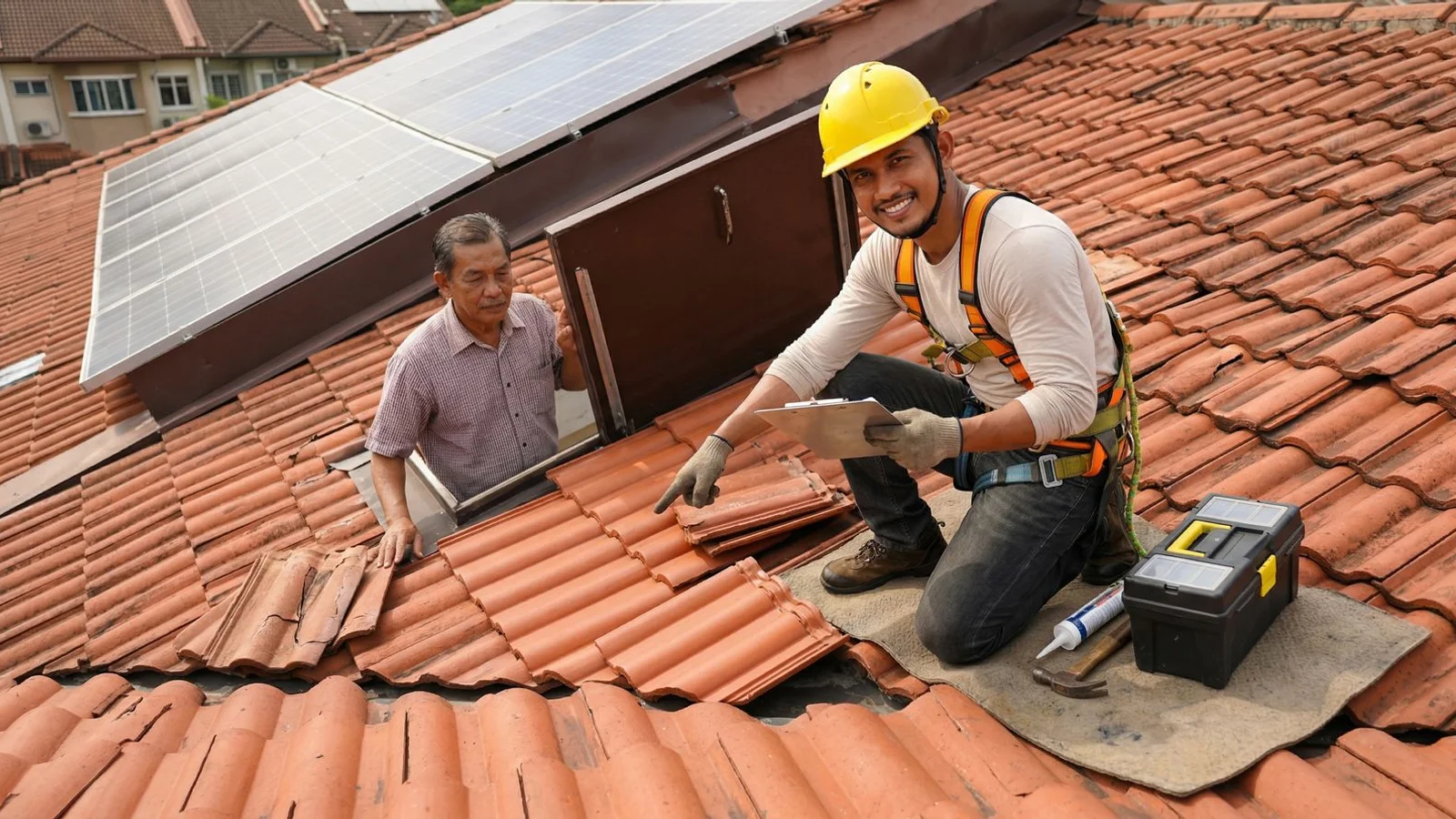
A typical repair job requires a combination of targeted material upgrades rather than just slapping on more cement. Our standard practice replaces outdated materials with modern, weather-resistant alternatives. The right products make all the difference in preventing future leaks.
Modern Repair Upgrades
- Replacing broken tiles: Sourcing common BMI Monier and Kia profiles allows us to match the exact shape and ensure a seamless fit.
- Applying dry fix solutions: Instead of using traditional cement mortar that cracks, we install flexible BMI Monier Wakaflex or Topflex II tape along the ridges.
- Upgrading sealants: Industrial polyurethane sealants like Sikaflex-11 FC or Pentens T-200 provide superior waterproofing compared to cheap hardware store silicone.
- Repairing valley flashing: Torn or rusted metal valleys are swapped for thicker, rust-resistant materials.
- Spot-repairing the underlay: Patching any torn sections of the sarking membrane fixes damage caused by past foot traffic.
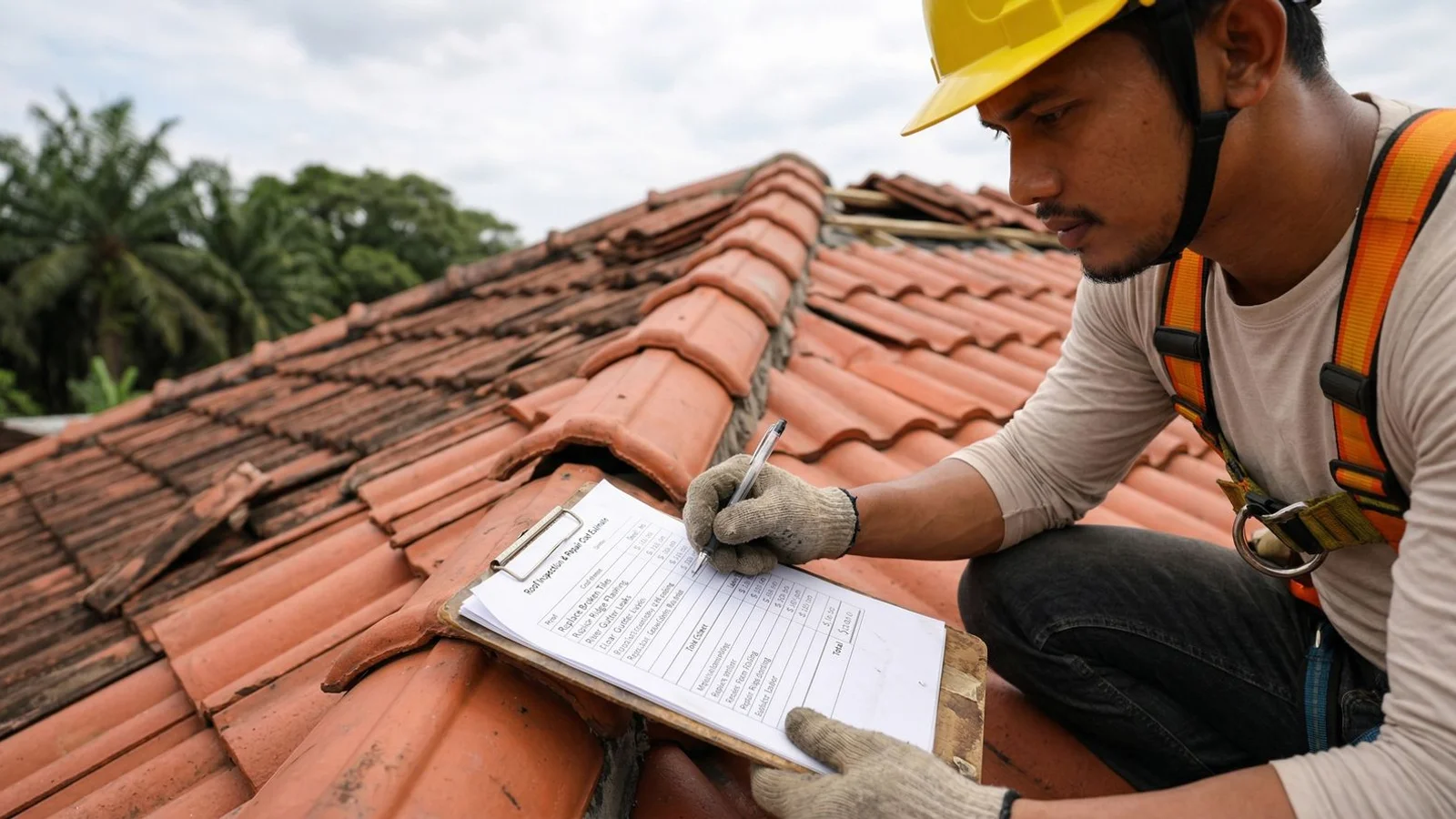
On a well-diagnosed single-source leak, the whole process takes a few hours and costs RM300 to RM800 in most cases. Complex repairs requiring significant flashing replacement or widespread underlay damage can push the budget between RM1,500 and RM3,000.
We always provide a transparent breakdown of these costs before starting. Financial clarity helps you plan the necessary maintenance effectively.
Step 4: The Flow Test
Before we pack up our tools, the repair zone undergoes a rigorous artificial rain test. A garden hose run over the repaired area for 10 minutes will reveal a bad patch job immediately. We aim to simulate the heavy downpours typical of the Klang Valley monsoon season. This step is crucial for verifying the integrity of the new seals.
Post-Repair Verification
Our final step involves scanning the attic space with a Flir thermal imaging camera during the water test. The thermal camera detects sudden temperature drops that indicate hidden moisture sneaking past the flashing.
If the weather cooperates, a post-rain check on the next heavy downpour provides complete peace of mind. We will gladly return if anything needs re-addressing after a natural storm. Customer satisfaction remains our top priority.
Tile Roof Leak Repair for KL Terrace Houses: What to Expect
Most terrace tile roofs in Malaysia are not permanent, maintenance-free structures. They are essentially roofs under continuous, light maintenance. Concrete roof tiles in our tropical climate generally have a useful lifespan of 30 to 50 years.
The goal of a good repair is not to make an aging roof brand new again. We focus on extending its useful life by five to ten years while keeping the cost proportional to the problem. Honest assessments are the foundation of our service.
Our transparent review will tell you honestly whether a RM500 patch is sufficient or if partial re-sealing along the ridge is necessary.
Expected Roof Material Lifespans in Malaysia
| Material | Estimated Lifespan | Common Signs of Aging |
|---|---|---|
| Concrete Tiles (e.g., BMI Monier) | 30 to 50 years | Fading colour, brittle edges, surface erosion |
| Traditional Cement Mortar | 10 to 15 years | Visible cracks, crumbling chunks in gutters |
| Dry Fix Tape (Wakaflex) | 15 to 20+ years | Edge peeling if improperly installed |
| Polyurethane Sealants | 10 to 15 years | Shrinkage, pulling away from joints |
Book a RM30 onsite inspection, and our specialists will give you the straight answer for your specific property. When you finally schedule your tile roof leak repair for KL terrace houses: what to expect is a professional team ready to keep your living space completely dry.
For our transparent roof leak repair services you can trust across the Klang Valley, reach out to the RLR Roofer team today.