Monsoon-Ready: A Klang Valley Gutter Maintenance Checklist
A simple pre-monsoon gutter and downpipe maintenance checklist for homeowners in Kuala Lumpur and Selangor.

Our team always notices a panic right before the monsoon seasons hit the Klang Valley.
You see ceilings dripping and repair costs tripling once the heavy rain starts falling. The Malaysian Meteorological Department warns that severe inter-monsoon thunderstorms can produce over 20mm of rainfall per hour.
We know that kind of volume demands a fully functional drainage system. Let’s look at the data, what it actually tells us about preparation, and explore a straightforward Klang Valley gutter maintenance checklist to protect your property.
The Goal of Gutter Maintenance
Your gutter system has one singular job.
It must catch rainwater from the roof and direct it safely down the downpipe to the surface drain. We consider a pre-monsoon check successful when it confirms water flows without backflow or overflow.
A single severe storm in Kuala Lumpur can dump 60mm of convective rain in just two hours. That sheer volume easily overwhelms a compromised system and leads to costly structural damage.
The Checklist
1. Clear the Gutters of Debris
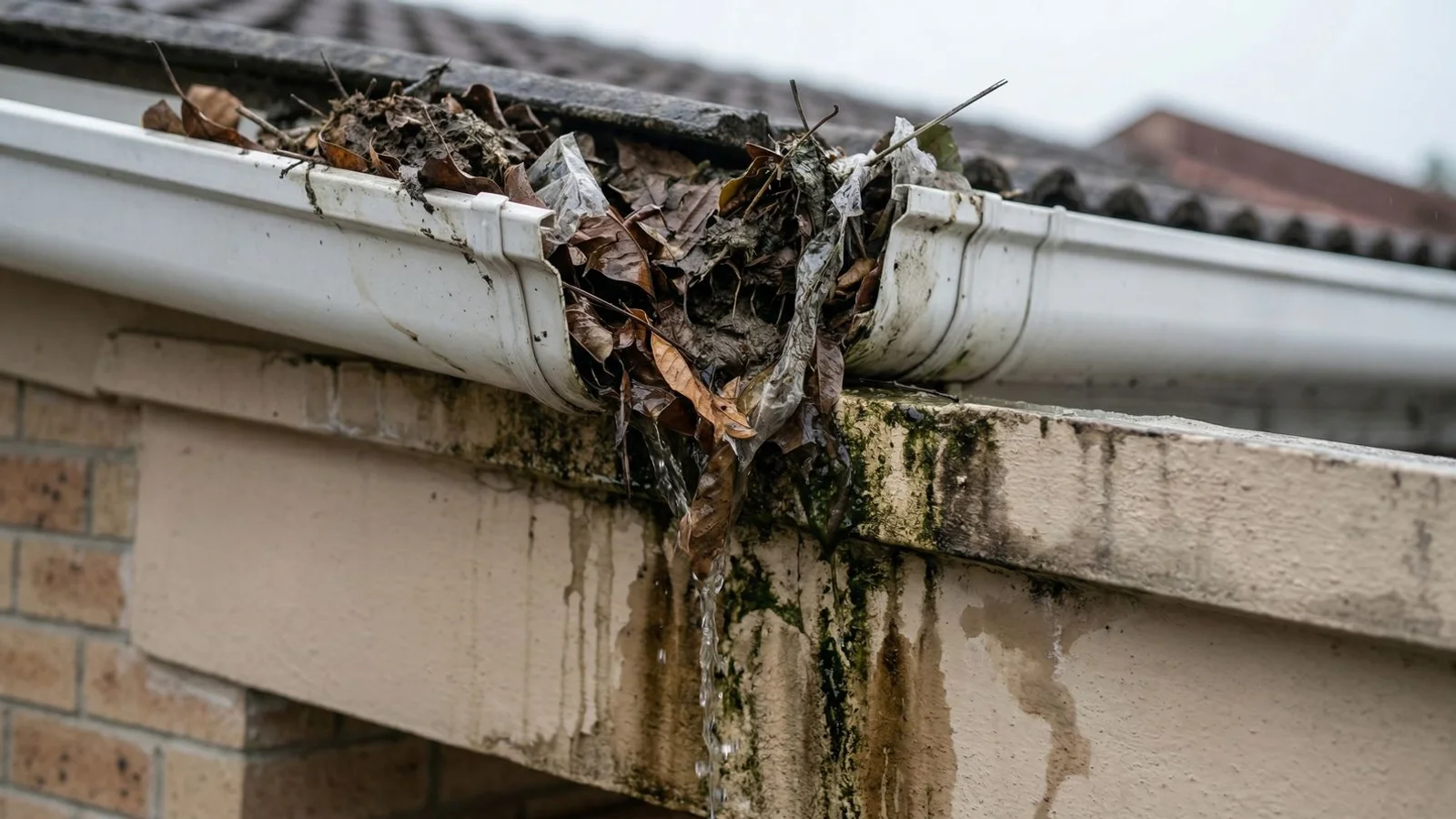
Leaves, twigs, and seeds accumulate surprisingly fast in Malaysian gutters.
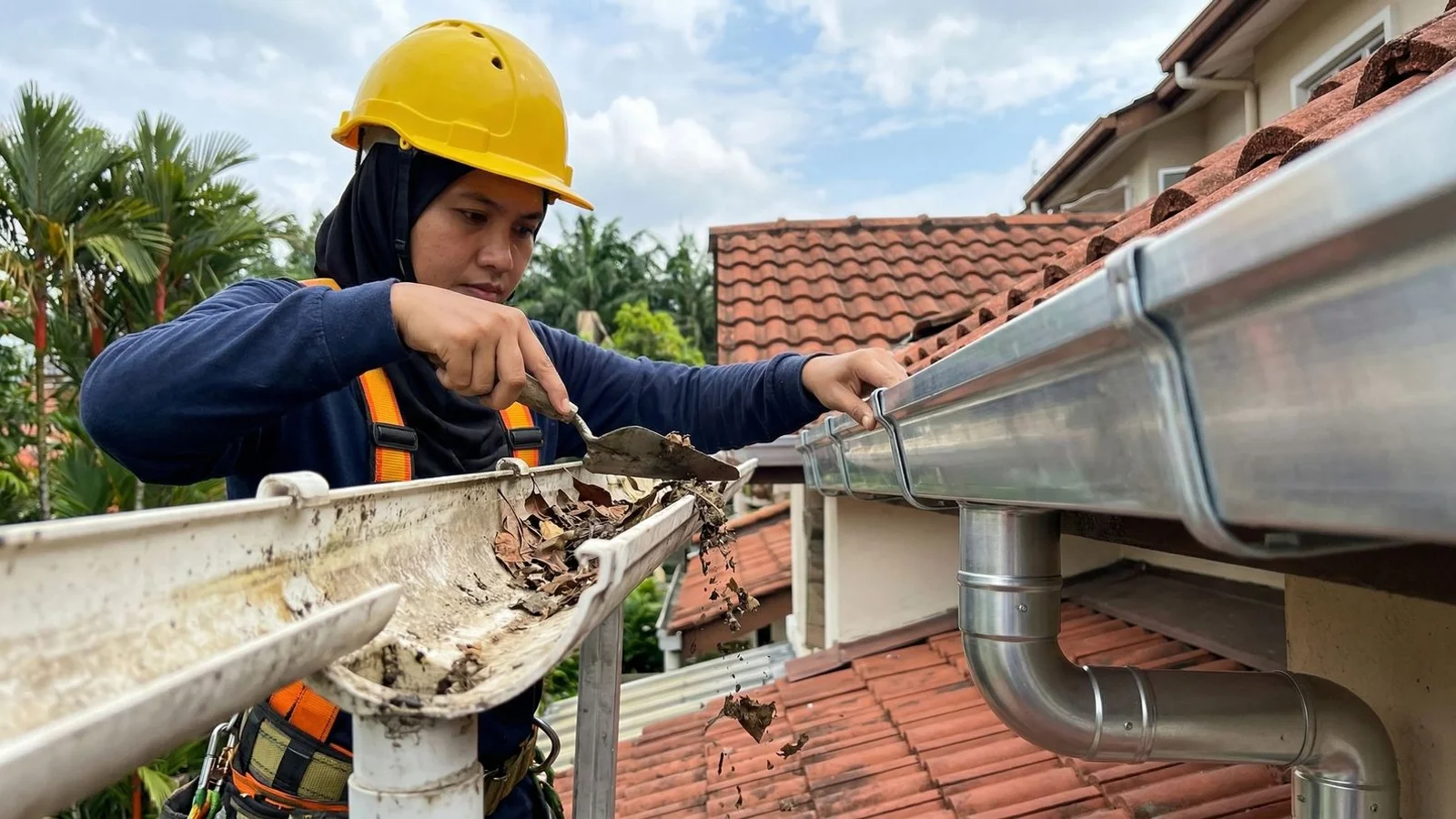
Our technicians regularly pull heavy debris like Angsana leaves and mango tree shedding from residential rooflines. You must remove everything by hand or with a scoop and bag it as you go.
Pushing debris toward the downpipe will create a severe jam. We strongly advise against leaving silt, as it hardens like cement under the tropical sun.
2. Flush the Gutters with Water
Once the debris is out, you need to test the flow dynamics. Our standard procedure involves running a garden hose from the highest point of each gutter run.
Watch the water flow carefully to ensure it behaves correctly.
- Move smoothly toward the downpipe.
- Not back up anywhere along the run.
- Exit the downpipe at the ground without gurgling or pooling.
If the water fails any of these checks, you have found an underlying issue. We use this simple simulation to spot slow leaks before they become major disasters.
3. Check Downpipes for Blockages
If the gutters drain slowly even after cleaning, the downpipe itself is likely blocked. Our crews frequently find compacted leaves, dead insects, or even Myna bird nests hidden inside the bends.
Tree roots are another common culprit at the bottom where the pipe enters the drain. You can clear most blockages using a standard plumber’s drain snake.
We recommend a zinc-plated 16-blade head unblocker for clearing stubborn tropical debris. A low-pressure water jet also works well for flushing out loose mud.
4. Inspect the Brackets and Fall
Look along the entire length of each gutter run. Our inspectors check to ensure it sits straight with a slight, consistent fall toward the downpipe.
A perfectly level gutter will pool water, creating a breeding ground for Aedes mosquitoes.
| Issue | Indication | Required Action |
|---|---|---|
| Loose Brackets | Gutter moves when touched. | Replace or re-fix brackets into the fascia board. |
| Dips or Sags | Water pools in the middle. | Adjust the fall gradient for proper drainage. |
| Outward Tilt | Water overflows away from the house. | Realign to correct installation drift. |
We always stress that fixing a sagging section early prevents the entire structure from collapsing under heavy water weight.
5. Inspect Joints and Seams
Every joint in a gutter system acts as a potential leak point. Our service calls often reveal failed silicone or degraded sealant at these critical junctions.
You should look for small drips from under the joint while the hose runs. White mineral streaks on the underside of the gutter are a classic sign of a slow, persistent leak.
We recommend resealing joints early because it is a quick, cheap job compared to repairing water-damaged ceilings.
6. Check the Gutter Material Condition
The intense Malaysian climate takes a toll on exterior building materials. Our assessments show that different gutter materials fail in very specific ways.
- uPVC gutters: Brands like Arensi Marley or Everplast are popular, but look for UV cracking, brittleness, and colour fading. Brittle uPVC shatters easily in strong storms.
- Metal gutters: Prepainted Galvanised Steel or Zincalume can develop rust, especially at cut joints. Treat small rust spots immediately.
- Aluminium gutters: These are highly durable, but you should check for corrosion at screw points or dents that hold water.
We replace heavily rusted metal sections immediately to avoid catastrophic failure during the November monsoon peak. Regular inspections keep these small wear issues from escalating.
7. Check the Drain Exit
Follow the downpipe down to where it enters the ground drain. Our team finds that a beautifully working gutter ending in a blocked drain still creates a massive flood risk.
Inspect the exit point to confirm the drain is actually open. It might be clogged with leaves, mud, or old builder’s debris.
We always clear the final exit path to ensure rainwater moves safely away from the foundation.
Safety Reminder
A large portion of gutter maintenance requires working from a ladder. Our safety protocols mandate strict fall protection, and you should take this just as seriously.
The Malaysian Department of Occupational Safety and Health recently reported that falls from heights accounted for around 32% of fatal workplace accidents. Domestic ladder falls are incredibly common and often result in severe head or extremity injuries.
We advise against doing this yourself if you lack a proper ladder or feel uncomfortable at heights. Working on the second storey of a terrace house is never worth risking a broken leg.
When to Call Us Instead
Sometimes a DIY approach is simply not feasible or safe. Our professionals step in when the risks or complexities outweigh the savings.
- Multiple sagging sections or completely failed brackets.
- Rusted metal gutters on older heritage homes.
- Downpipes that refuse to clear with a hose or a plumber’s snake.
- Any active leak discovered during your initial flow test.
- High or awkward roof access that you cannot navigate safely.
We provide a comprehensive pre-monsoon gutter maintenance service that typically costs between RM300 and RM800 for most residential properties. This fee includes thorough cleaning, flow testing, minor repairs, and a detailed written report of our findings.
Our schedule fills up exceptionally fast once the first October storms hit, so book your inspection early. Prevention is always cheaper than repairing flood damage.
For our transparent roof leak repair services you can trust across the Klang Valley, reach out to the RLR Roofer team today.