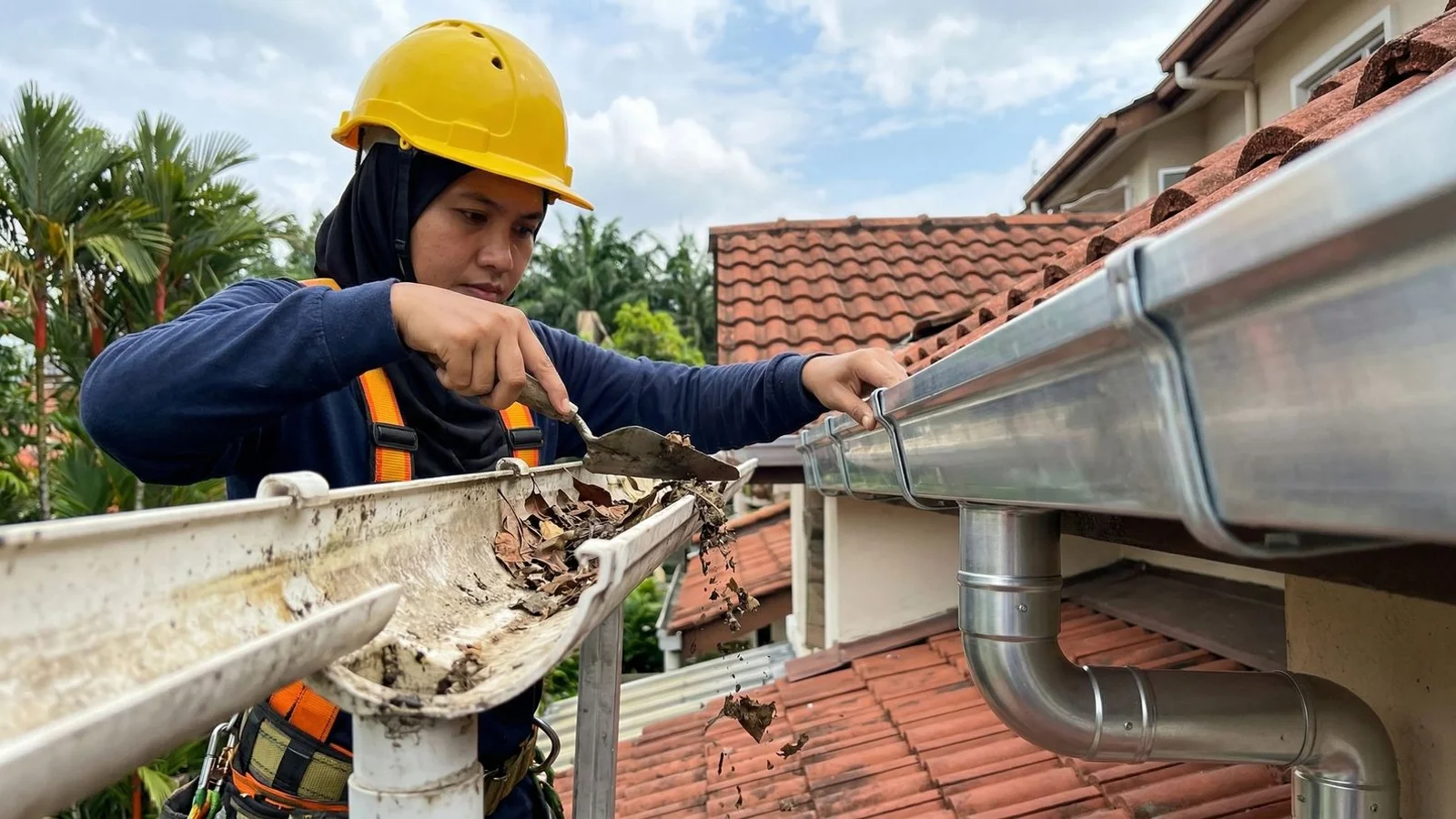
How Blocked Gutters Cause 'Roof' Leaks in Malaysian Homes
Many leaks blamed on the roof are actually caused by blocked or sagging gutters. Here's how to tell — and what to do about it.
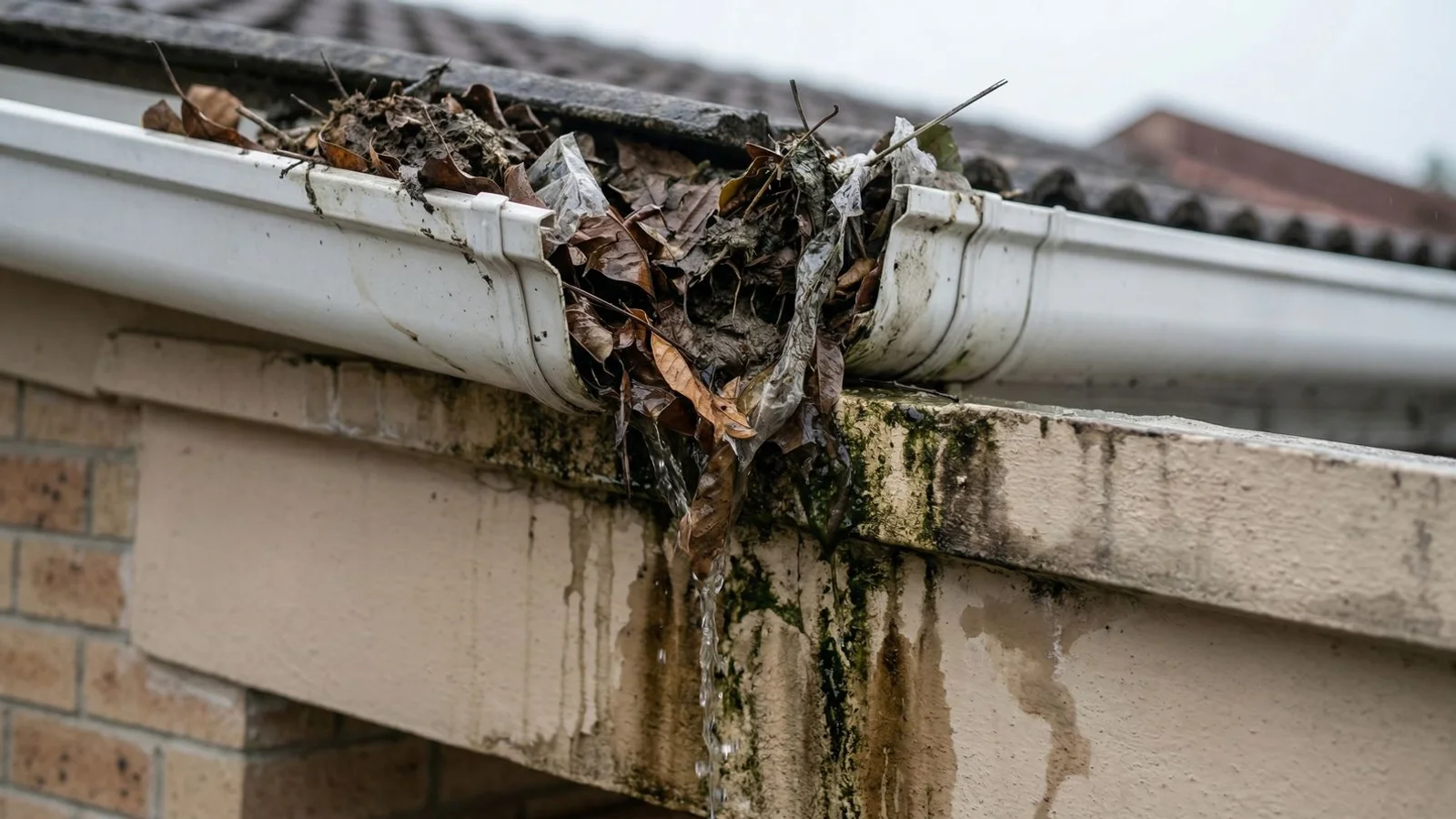
Every monsoon season in the Klang Valley, our professional service team receives frantic calls about severe roof leaks, but understanding how blocked gutters cause these exact issues changes everything.
These perceived roofing disasters are usually just gutter problems dressed up as a stain on your plaster ceiling.
From what we observe on the ground, even a minor blockage during a typical 150mm-per-hour Malaysian thunderstorm pushes water right back under the tile line. By the time that water pools indoors, everyone automatically blames the roof tiles.
We will explain the mechanics behind these leaks, outline the clear warning signs, and show you why the real solution is often surprisingly cheap.
How Blocked Gutters Cause Interior Leaks
Gutters serve a highly specific function designed around the MS2692:2019 Malaysian Standard for Rainwater Drainage. This standard ensures the system catches water running off the roof, carries it to the downpipe, and sends it safely to the ground drain.
When debris blocks that path, the system fails rapidly. Water has to escape somewhere else. In the middle of a heavy storm, that escaping water typically takes one of four destructive paths into your property.
- Backflow under the tile line. The water overtops the inner lip of the gutter channel. It then flows backwards under the roof eaves, completely soaking the wooden roof trusses or the wall plate.
- Wall overflow. Excess water cascades directly over the front edge of the gutter. This constant sheet of water saturates the exterior wall finish and eventually seeps through to damage expensive interior L-box plaster ceilings.
- Pooled water in a sagging section. A drooping section holds stagnant rainwater that slowly degrades the material. The joint eventually cracks and fails, dropping water directly above your windows or doors.
- Downpipe back-up. A completely choked downpipe forces water to reverse direction. This turns the entire gutter run into a suspended pond that will inevitably overflow.
The Diagnostic Signs
Gutter-caused leaks display a highly distinctive pattern that separates them from standard roof tile failures. If you spot two or more of these specific symptoms, you should investigate the drainage system first.
Our inspectors always look for these classic red flags during a site visit. Yellow or brown water stains appearing on the cornices are a primary indicator. We also check for physical distortion along the roofline.
Older uPVC materials, which typically only last 10 to 15 years in our climate, sag noticeably when weighed down by trapped wet dirt.
- Stains near the top of a wall, rather than in the exact middle of the living room ceiling.
- Watermarks on walls directly under the gutter line, particularly on outward-facing exterior walls.
- Water running over the front of the channel visibly during heavy rain.
- A gutter that looks visibly sagging or tilted when viewed from the ground.
- Leaves, dirt, moss, or plastic debris piling up visibly inside the channel.
- Downpipes that fail to drain water properly during a storm.
Compare this to a true roof leak pattern. A damaged roof tile usually creates a stain in the dead centre of a ceiling or directly under the highest peak of the roof.
The Malaysian Factors
Several local environmental factors cause drainage systems in the Klang Valley to degrade much faster than those in temperate climates. Our local weather conditions push building materials to their absolute limits.
The Kuala Lumpur region receives an average of 2,600mm of rainfall annually. We know that any minor bottleneck will cause the entire system to back up in minutes. Here are the primary triggers for early material failure in our region:
- Extreme Rainfall: According to the Malaysian Meteorological Department (MetMalaysia), the Northeast Monsoon and severe April inter-monsoon thunderstorms generate peak rainfall intensities that instantly overwhelm partially blocked systems.
- Tropical Vegetation: Ubiquitous local tree species like the Angsana or the broad-canopied Rain tree (Samanea saman) drop heavy leaves, seeds, and small branches all year round.
- Severe UV Degradation: Intense tropical heat accelerates material fatigue, causing standard PVC brackets to turn brittle and snap.
- Hidden Silt Buildup: Heavy rain sweeps dirt and moss from the roof tiles directly into the channels, creating a dense layer of heavy silt that remains invisible from the ground.
The Fix Is Usually Cheap
The most reassuring news is that repairing a drainage issue is typically the most affordable service call we handle. Repairing a severely water-damaged custom plaster ceiling can easily cost thousands of Ringgit. A simple blockage removal is a fraction of that price.
Our team provides straightforward pricing for these common corrections. This transparent approach helps property owners make fast decisions before the next storm hits.
We strongly recommend addressing these minor faults immediately. Here is a breakdown of typical service costs for a standard terrace house in our region:
- Gutter cleaning: RM300 to RM600 for a full residential run, which includes flushing the downpipes.
- Bracket replacement and re-alignment: RM400 to RM900 to correct the gradient so water actually flows to the drain.
- Joint resealing: RM300 to RM600 for targeted leak-sealing at the connection points.
- Section replacement: RM600 to RM1,500 when a severely damaged segment needs swapping out.
- Full system replacement: RM1,500 to RM3,500, depending on the chosen material.
Material Comparison for Replacements
If your old uPVC system has failed completely, upgrading the material offers much better long-term protection. The initial investment varies, but the extended lifespan often justifies the cost.
| Gutter Material | Estimated Lifespan | Key Benefit in Malaysia |
|---|---|---|
| Standard uPVC | 10 to 15 years | Cost-effective and widely available for quick repairs. |
| Aluminium (0.8mm to 1.0mm) | 20 to 25 years | Highly resistant to UV damage and handles thermal expansion perfectly. |
Compare these simple maintenance costs to the massive expense of a misdiagnosed roof repair that fails to solve the actual leak.
The Flow Test
The absolute safest and simplest way to confirm a drainage failure is by conducting a controlled flow test. You run a standard garden hose at the highest point of the gutter channel for five minutes and simply observe the water’s path.
If the water overtops the inside lip, spills over the front fascia, or forms a deep puddle halfway down the run, you have found the culprit. You can identify this failure without ever needing to climb a dangerous, slippery roof ladder.
Safety Warning: You must never attempt this water flow test during an active thunderstorm. The Klang Valley is highly prone to severe lightning strikes, making any outdoor water testing extremely dangerous during bad weather.
Conclusion
Understanding exactly how blocked gutters cause extensive interior water damage empowers you to take the right action.
The cheapest repair on a leaking roof is almost always located in the drainage channel right below the tiles.
Our technicians can quickly verify if your persistent leak is just a simple blockage. You can book our comprehensive RM30 inspection today. Let the experts provide a clear diagnosis so you can protect your property before the next major monsoon hits.
For professional roof leaking repair in Kuala Lumpur you can trust across the Klang Valley, reach out to the RLR Roofer team today.