Leaking Car Porch Slab? PU Injection Might Be the Answer
Why leaking car porch slabs in KL terrace houses often need PU injection rather than a simple surface coating.
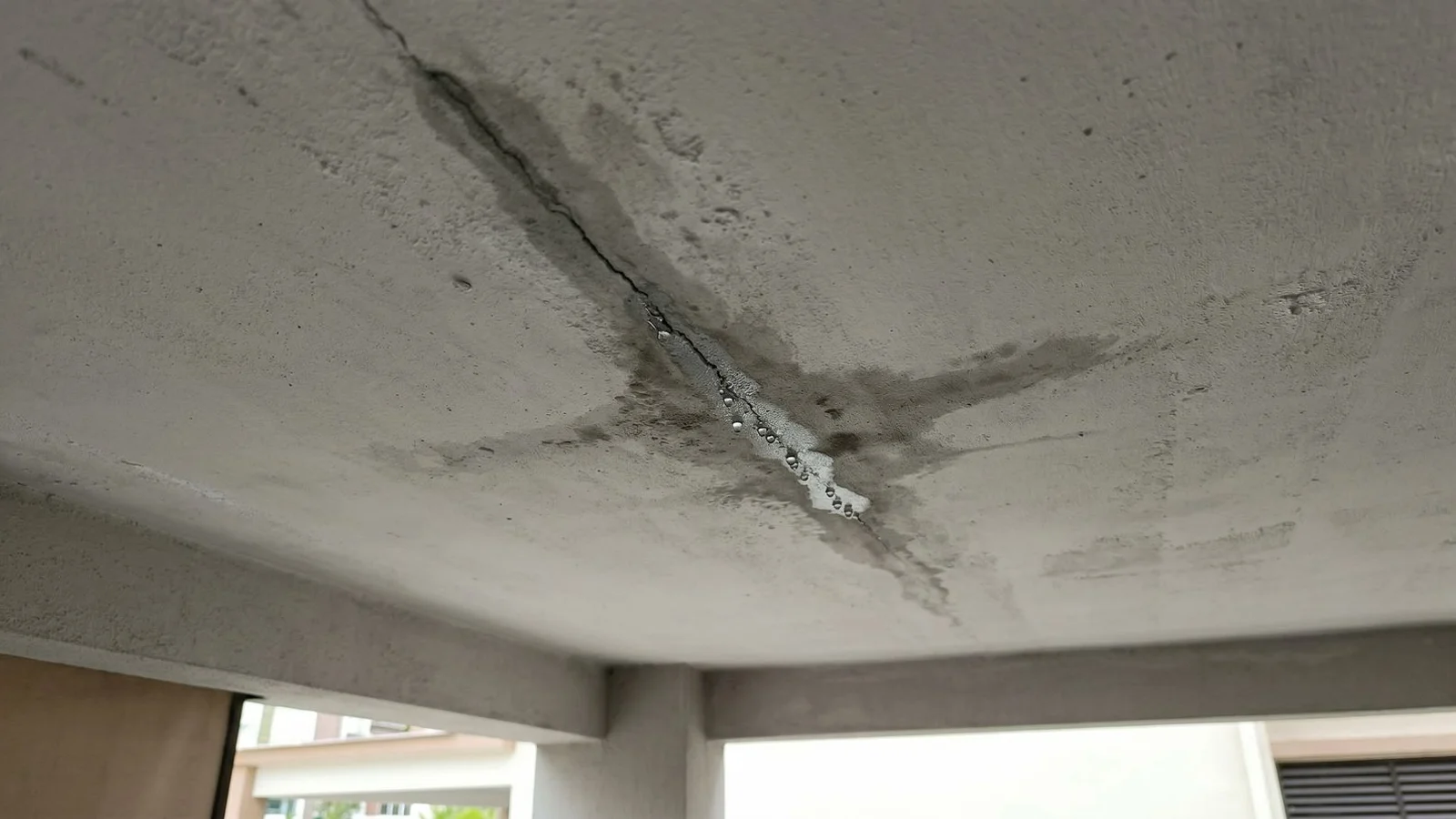
Our professional waterproofing team receives repair calls about leaking car porch slabs across Kuala Lumpur almost daily.
The typical homeowner story sounds incredibly familiar. Rainwater drips steadily from the concrete ceiling onto the parked vehicles below.
We regularly see cases where a contractor painted a new waterproofing layer last year. This surface fix works for a few months before the leak inevitably returns. You are experiencing exactly why these exposed structures are notoriously difficult to seal.
Our experts will explain exactly what causes these failures. The structural data provides clear clues about the underlying problem.
A leaking car porch slab requires a proper fix, and PU injection might be the answer you have been looking for.
Why Car Porch Slabs Leak
We usually define a car porch slab as a reinforced concrete structure sitting over an open parking area. The surface faces direct exposure to Malaysia’s harsh afternoon sun and heavy monsoon rain. Vehicles sit underneath this exposed structure constantly.
Our inspections reveal several specific structural changes that happen over decades of weather exposure. The Klang Valley climate creates a perfect storm for concrete deterioration. Foundation settlement in clay soils often triggers the initial damage.
- Thermal cycling fractures the concrete. Constant expansion in the 32°C afternoon sun and contraction at night creates fine hairline cracks.
- Rebar corrosion destroys internal integrity. Steel reinforcement expands by up to seven times its original volume as it rusts. This massive pressure forces existing cracks open.
- Surface materials age rapidly. The original elastomeric or cementitious waterproofing membrane eventually becomes brittle. UV rays accelerate this degradation.
- Moisture penetrates the structure. Rainwater finds these open pathways easily during the wet season. The moisture travels straight through to the underside.
We observe active drips forming on the ceiling of the car porch as the final result. These water marks usually concentrate along specific, visible crack lines. Your vehicle ends up bearing the brunt of this highly alkaline water.
Why Surface Waterproofing Usually Fails
We completely understand the temptation to paint a new waterproofing membrane on top of the slab. A dry, structurally sound surface can actually benefit from this treatment. A slab that is already cracked and holding moisture requires a totally different approach.
Our teams frequently replace failed surface coatings for two major reasons. This explains why so many local repair jobs fail within months. The contractor might have applied the coating correctly, but they chose the wrong method for the situation.
The Problem with Wet Concrete
We know from experience that you cannot effectively waterproof wet concrete. Standard elastomeric and cementitious coatings require a completely dry substrate to bond properly. A crack filled with live rainwater causes the new coating to delaminate rapidly.
The Force of Hydrostatic Pressure
Our technicians often see massive blisters forming under new paint jobs. Hydrostatic pressure pushes the trapped moisture upward against the new coating. The weakest point eventually bursts right over the crack you intended to seal.
Why PU Injection Works
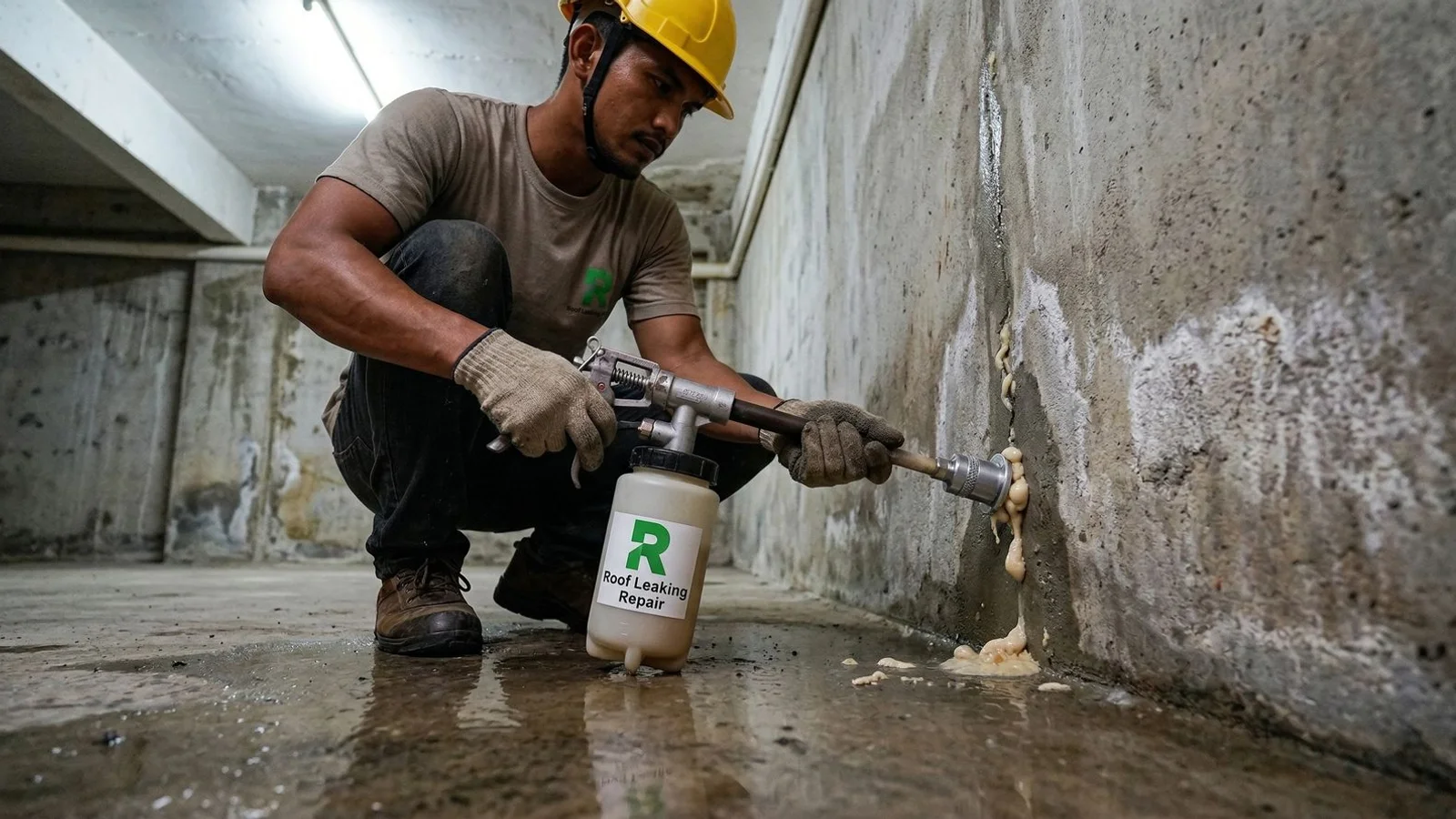
Our methodology tackles the problem from a completely different angle by filling the crack from the inside. The polyurethane resin reacts directly with the water currently trapped in the slab. The material cures into a flexible, permanent seal that bonds tightly with both sides of the concrete.
We follow a highly specific procedure on a typical residential car porch slab. This process requires specialized equipment to ensure complete penetration. The exact steps guarantee a permanent result without destructive hacking.
- Mapping the damage: Technicians trace the active cracks from the underside of the slab.
- Installing aluminum packers: Workers drill holes and insert A8 or A10 injection packers at staggered intervals along the crack line.
- High-pressure injection: The crew uses a specialized grouting pump to force hydrophobic PU resin, like Pentens PU-300 or Sika, into the cavity.
- Permanent sealing: The resin expands up to 30 times its original volume upon contacting water. It pushes out the moisture and cures into a watertight barrier.
We complete this entire process without any demolition or tile lifting. Homeowners avoid weeks of messy downtime and loud construction noise. The treatment works perfectly on a live, wet crack, which makes it ideal during the monsoon season.
When PU Injection Isn’t Enough on Its Own
We sometimes recommend PU injection as just one part of a comprehensive repair strategy. A standalone solution will not solve severe structural deterioration. Certain conditions require combining internal sealing with external restoration work.
Our initial inspection will identify if your property needs this combined approach. The entire top surface of the slab might be degrading rapidly. New cracks will likely form unless a fresh top-surface waterproofing membrane protects the area.
Severe Rebar Corrosion
We cannot rely solely on injection if the internal steel reinforcement shows extensive rusting. The resin successfully seals the current void, but ongoing corrosion will just create new fractures nearby. A contractor must treat the rusted rebar and repair the concrete cover first.
Structural Integrity Limits
Our team steps back when the slab exhibits structural cracking beyond safe residential thresholds. A major foundation settlement issue requires an assessment by a CIDB-certified structural engineer. A standard waterproofing contractor cannot legally or safely resolve profound load-bearing failures.
What It Costs
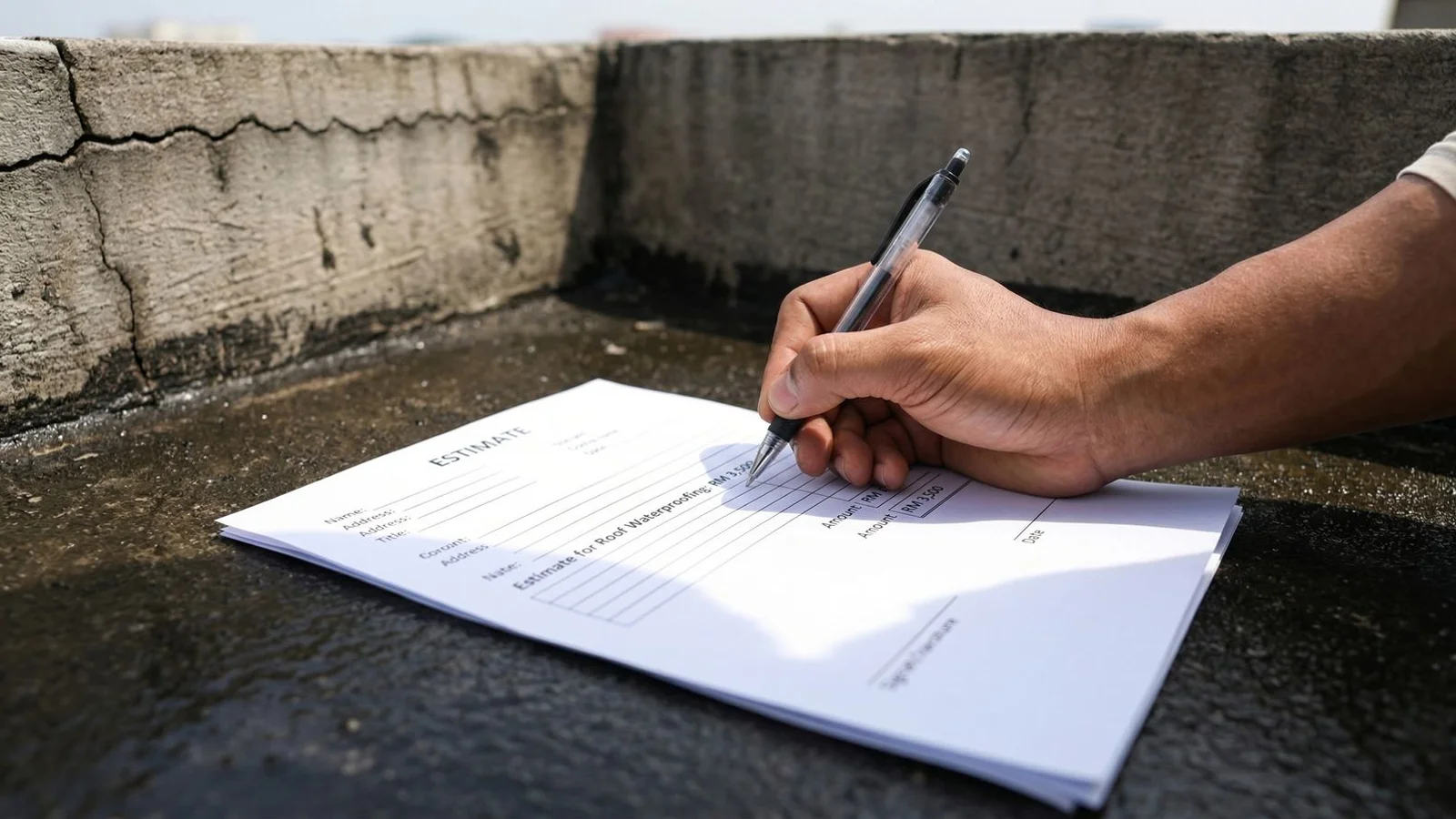
We provide transparent pricing for typical residential repair jobs across the Klang Valley. The current market rates for 2026 offer excellent value compared to full slab replacement. Prices depend heavily on the total number and length of the active cracks.
Our standard PU injection jobs range between RM800 and RM3,000 for most terrace houses. Individual injection points generally cost around RM45 to RM50 each. This highly targeted approach ranks as one of the most cost-effective interventions available today.
| Feature | PU Injection Grouting | Surface Membrane Coating |
|---|---|---|
| Typical Cost | RM800 - RM3,000 | RM1,500 - RM4,500+ |
| Application Area | Underside (Ceiling) | Topside (Floor) |
| Wet Weather Suitability | Excellent (Needs water to react) | Poor (Requires dry substrate) |
| Demolition Required | None | Often requires removing old tiles |
| Curing Time | Fast (Hours) | Slow (Days) |
We strongly advise comparing these options based on your specific weather exposure. The financial data clearly supports internal injection for active leaks. You save thousands of Ringgit by avoiding unnecessary tile hacking.
Don’t Repaint Over It, Inspect It
We want you to stop repainting the ceiling if the leak keeps coming back. Repeated surface applications waste money and ignore the root cause.
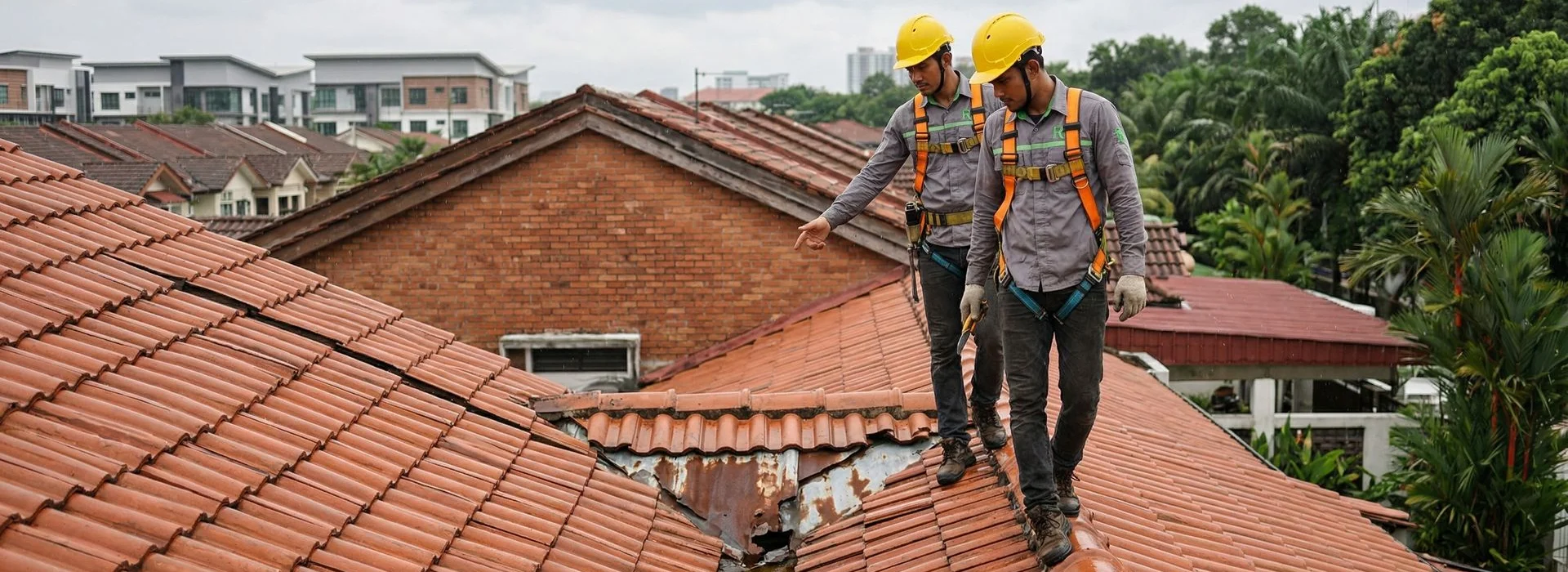
A professional assessment provides the clarity needed to fix the issue permanently. Our RM30 inspection service will determine the exact right path forward.
The team will tell you honestly if PU injection fits your situation or if another fix is necessary.
Book a consultation today to finally stop throwing money at the wrong solution.
For expert roof leak repair across the Klang Valley you can trust across the Klang Valley, reach out to the RLR Roofer team today.