Condo Top Floor Leaking? What an Inspection Covers in a KL High-Rise
What a roof inspection looks like for top-floor condo units in Kuala Lumpur — slab seepage, wall joints, and shared roof decks.
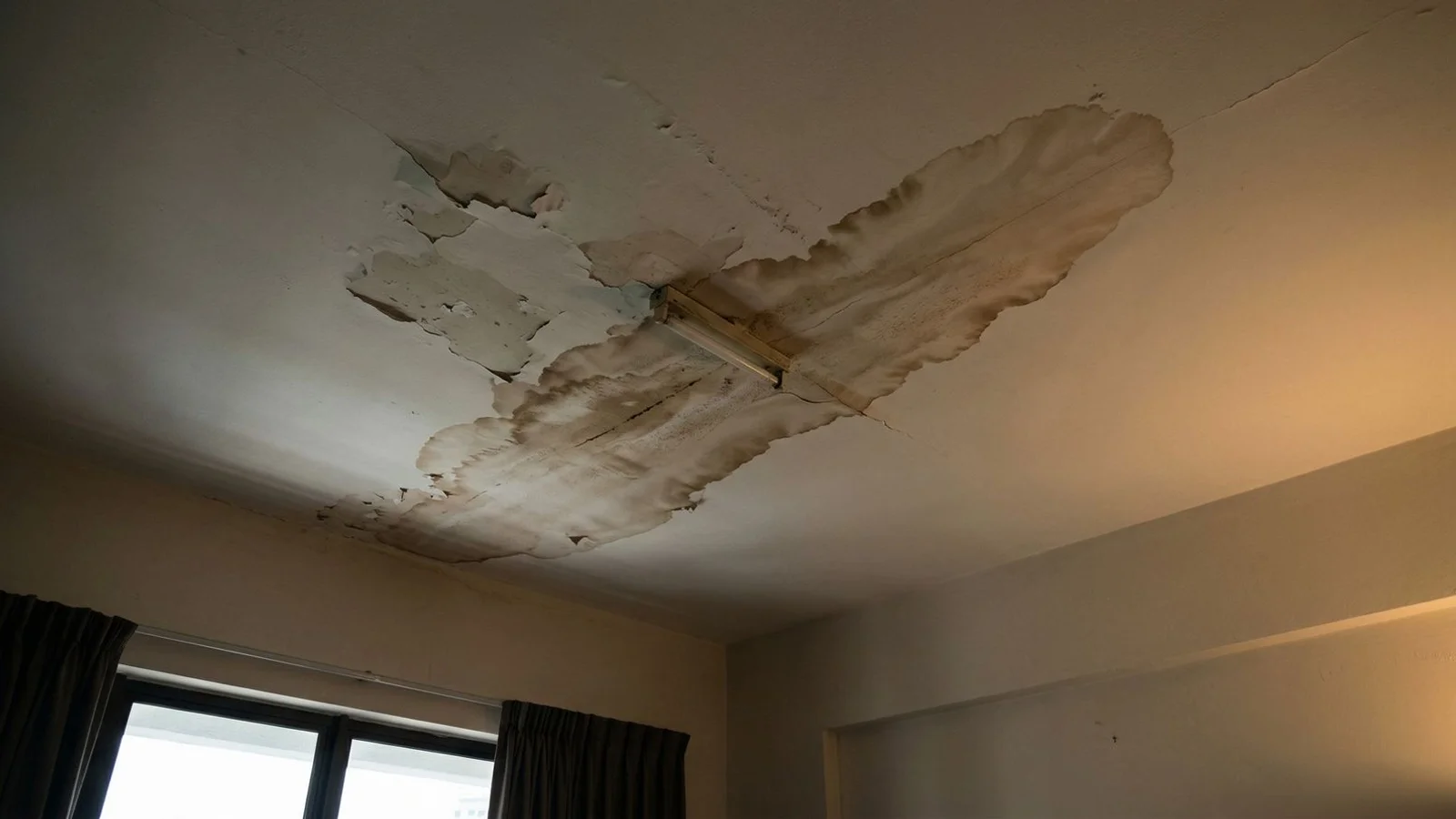
We regularly see the frustration that comes with a wet ceiling in a top-floor Kuala Lumpur condo. The heavy tropical rain of the Klang Valley puts immense stress on flat roof decks, turning a simple drip into a complex legal and structural issue.
Our inspections often reveal that the hardest part is simply figuring out who is legally responsible to fix it.
You need clear evidence before spending money on private contractors. If you are dealing with a Condo Top Floor Leaking? What an Inspection Covers in a KL High-Rise is exactly what we will outline, including the specific strata laws, the diagnostic process, and the practical steps to hold your management office accountable.
Start with Who Owns What
We always begin our assessment by determining whether the affected area is classified as common property or a private unit. Under Malaysia’s Strata Management Act 2013 (SMA), Section 142 clearly states that any inter-floor leak is legally presumed to originate from the upper unit or the roof deck unless proven otherwise.
Our clients frequently waste weeks arguing with neighbours before realising the Joint Management Body (JMB) holds the primary responsibility for common roof deck slabs. Once you submit a formal written notice, the management has exactly seven days to conduct an inspection and then issue a Form 28 Certificate of Inspection.
- Common property (usually): The roof deck and the concrete slab forming your ceiling fall under JMB or Management Corporation (MC) jurisdiction.
- Your unit (sometimes): Internal pipe failures inside your private walls change the liability rules completely.
We advise checking your Sale and Purchase Agreement (SPA) and building bylaws to understand these boundaries. Formalising the report early forces the management to follow the strict legal timeline set by the Commissioner of Buildings (COB).
What a Top-Floor Condo Inspection Covers
We check four distinct zones when called to evaluate a high-rise unit in the Klang Valley. Modern diagnostic tools remove the guesswork from finding hidden water paths and structural failures.
1. Interior Evidence
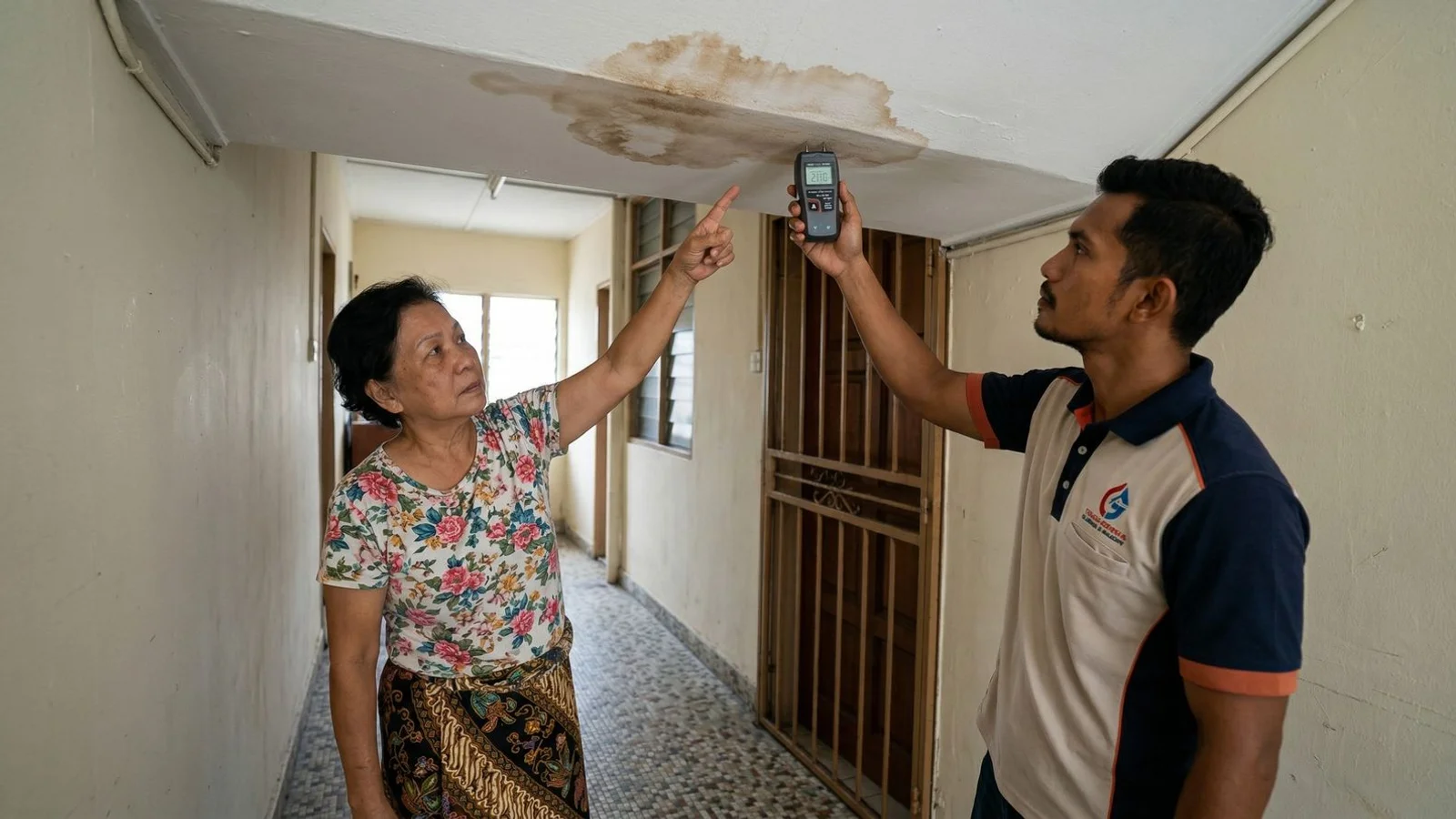
We use FLIR thermal imaging cameras and Protimeter moisture meters to map the exact dampness pattern behind your plaster ceiling. Visual stains only show about 20% of the actual water spread.
Our team tracks the drip location because a central room stain usually indicates direct slab seepage. Moisture pooled against an external wall points straight to a parapet joint failure instead.
2. The Roof Deck Above (If Accessible)
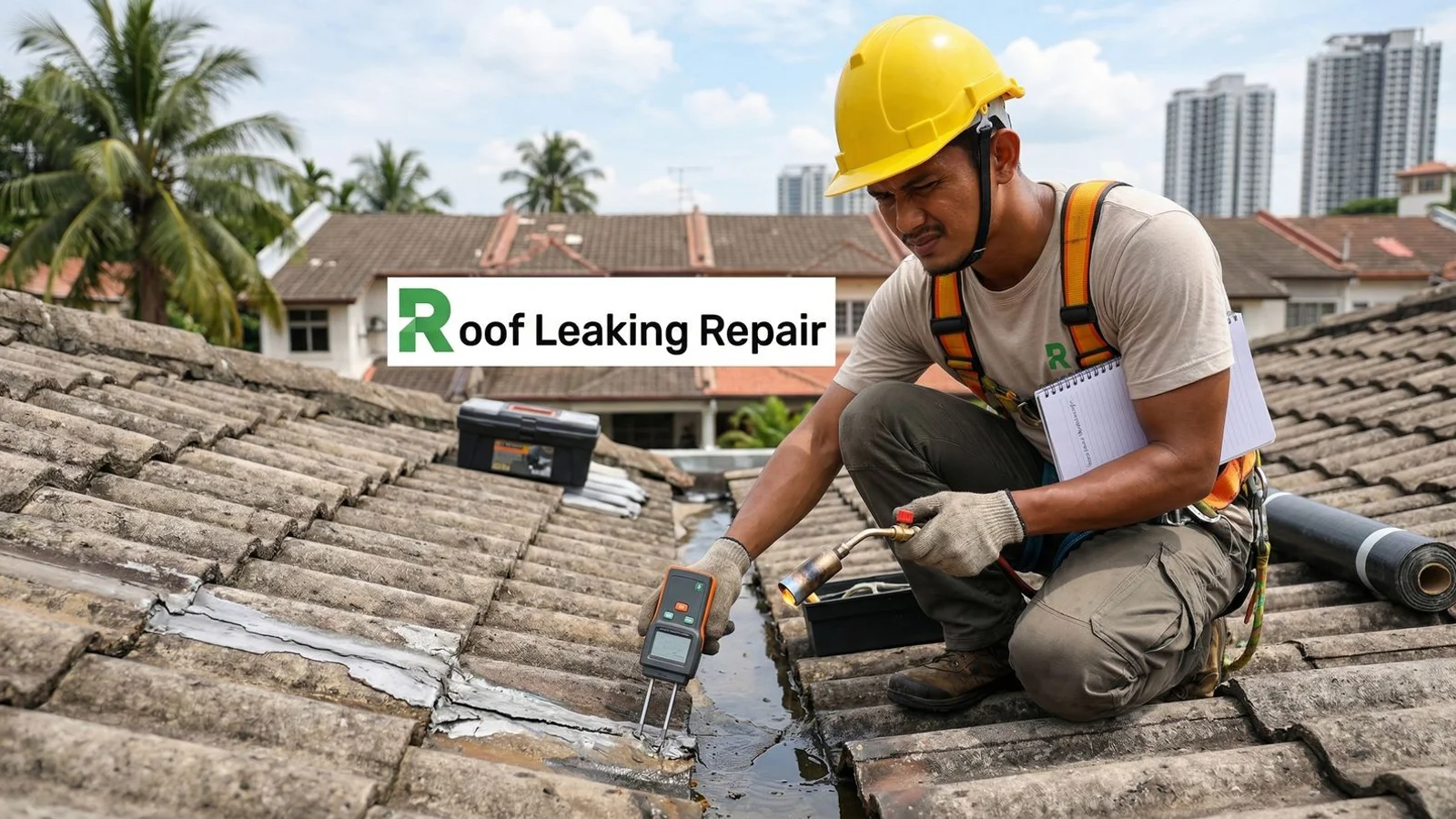
We request JMB permission to access the roof deck zone directly above your unit. Most KL condos use Polyurethane (PU) liquid coatings or torch-on bituminous membranes, which typically only last 5 to 10 years under the intense Malaysian sun.
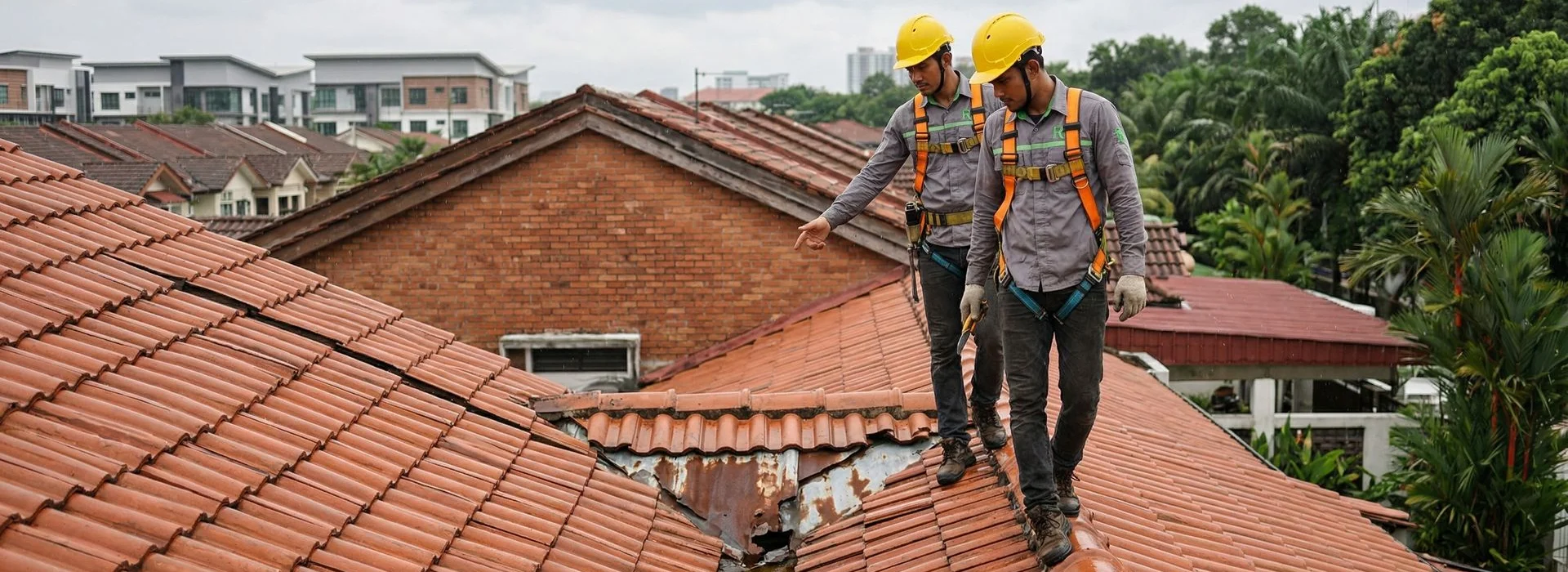
Our inspectors look for specific signs of membrane degradation and drainage issues.
- Waterproofing membrane condition: Blisters, cracks, and exposed fibreglass fabric indicate a breached protective seal.
- Drain and scupper function: Simple blockages from leaves and debris cause major ponding water issues.
- Parapet wall junctions: These right-angle corners undergo severe thermal expansion and are high-risk zones for cracking.
- Construction joints: The expansion gaps between large concrete slab sections frequently fail over time.
3. Internal Plumbing Paths
We rule out pressurised freshwater lines during every top-floor assessment. High-rise buildings often install booster pumps for the top two or three floors to maintain water pressure, increasing the risk of unexpected pipe bursts.
Our technicians conduct a simple shut-off test to isolate these internal supply lines. This quick procedure immediately proves whether the water is from rain seepage or a failed plumbing joint.
4. Wall Junctions
We pay close attention to the slab-to-wall junction, as it ranks among the top three failure points in local high-rises. The strong winds during the Klang Valley monsoon season drive rain horizontally into tiny exterior cracks.
Our equipment detects the hidden moisture tracks running down the interior concrete walls. This specific building defect remains completely invisible to the naked eye until the interior paint starts bubbling.
The Report We Write
We provide a comprehensive technical report rather than a basic repair quote. A formally documented file turns a frustrating conversation with your JMB into a clear, actionable request.
Our documentation is designed to support your case if the dispute escalates to the Strata Management Tribunal (SMT). The authorities require objective proof before enforcing repair orders or assigning financial liability.
- The identified water source: Where the moisture is most likely entering the building structure.
- Supporting technical evidence: Thermal scans and moisture readings backing up the visual conclusion.
- Liability assessment: Clear guidance on whose legal responsibility the repair falls under.
- Proposed rectification scope: The exact technical steps required to fix the membrane or pipe.
- Estimated cost ranges: Realistic budget expectations for the required waterproofing works.
What You Can Do Now
We highly recommend taking immediate steps to protect your property and your legal rights. While waiting for the professional inspection, gathering proper evidence is crucial for insurance claims and potential Tribunal cases.
| Action to Take | Why It Matters |
|---|---|
| Document everything | Dated photos and videos prove the timeline of the active damage for the JMB. |
| File a written complaint | Verbal chats do not trigger the 7-day Form 28 legal inspection deadline. |
| Do not repaint yet | Covering the wet stain hides the exact evidence technical inspectors need to measure. |
| Protect valuables | Heavy plastic sheeting saves your electronics and furniture from sudden drips. |
We often see owners make the mistake of painting over wet spots too early to hide the damage. Waiting ensures the underlying roof leak is permanently fixed before you spend money on cosmetic repairs.
Booking a Condo Inspection
We charge the standard RM30 fee for top-floor condo inspections, the exact same rate applied to residential terraces. This initial fee is fully waived when you approve a private repair scope if the fault is actually located inside your unit.
Our admin team will guide you through the process of requesting roof deck access from your management office when you call to book. Even if the final verdict points to common property liability, you still walk away with a legally useful technical document.
We arm you with the specific data needed to hold the management accountable under the Strata Management Act. Contact us today to schedule your moisture mapping and start resolving your Condo Top Floor Leaking? What an Inspection Covers in a KL High-Rise is the vital first step toward a dry ceiling.
For professional roof leak repair and waterproofing you can trust across the Klang Valley, reach out to the RLR Roofer team today.